Protein Shake vs. Whole Food: The Honest Comparison
The gym debate that won't die. One side says "real food only." The other lives off shakes. The research says both work — and the right answer depends on your day, not your dogma.
Muscle Protein Synthesis: A Tie
Gram-for-gram, a 30g whey shake and a 4 oz chicken breast (also ~30g protein) trigger virtually identical muscle protein synthesis responses — provided both hit the 2.5–3g leucine threshold. The body doesn't care if the amino acids came from a scoop or a chicken thigh.
Where Whole Food Wins
- Satiety: Chewing, fiber, and slower digestion keep you fuller longer.
- Micronutrients: Iron, zinc, B12, choline — whole foods come loaded.
- Gut health: Fiber from beans, eggs with yolk, and lean meats support a healthier microbiome.
- Long-term flexibility: Skills that scale beyond a training season.
Where Shakes Win
- Cost per gram: Whey concentrate runs ~$0.04–0.08/g protein. Chicken breast is ~$0.10–0.20/g. Steak is much more.
- Speed: 30 seconds to mix, 30 seconds to drink. No cooking, no cleanup.
- Portability: A shaker bottle in a gym bag beats meal-prepping at 6 AM.
- Post-workout amino acid spike: Whey hits the bloodstream in 30 minutes — useful (though not critical) after intense training.
- Hitting daily targets: If you struggle to eat 180g+ from food, a shake or two closes the gap painlessly.
The Hybrid Approach (What Most Athletes Actually Do)
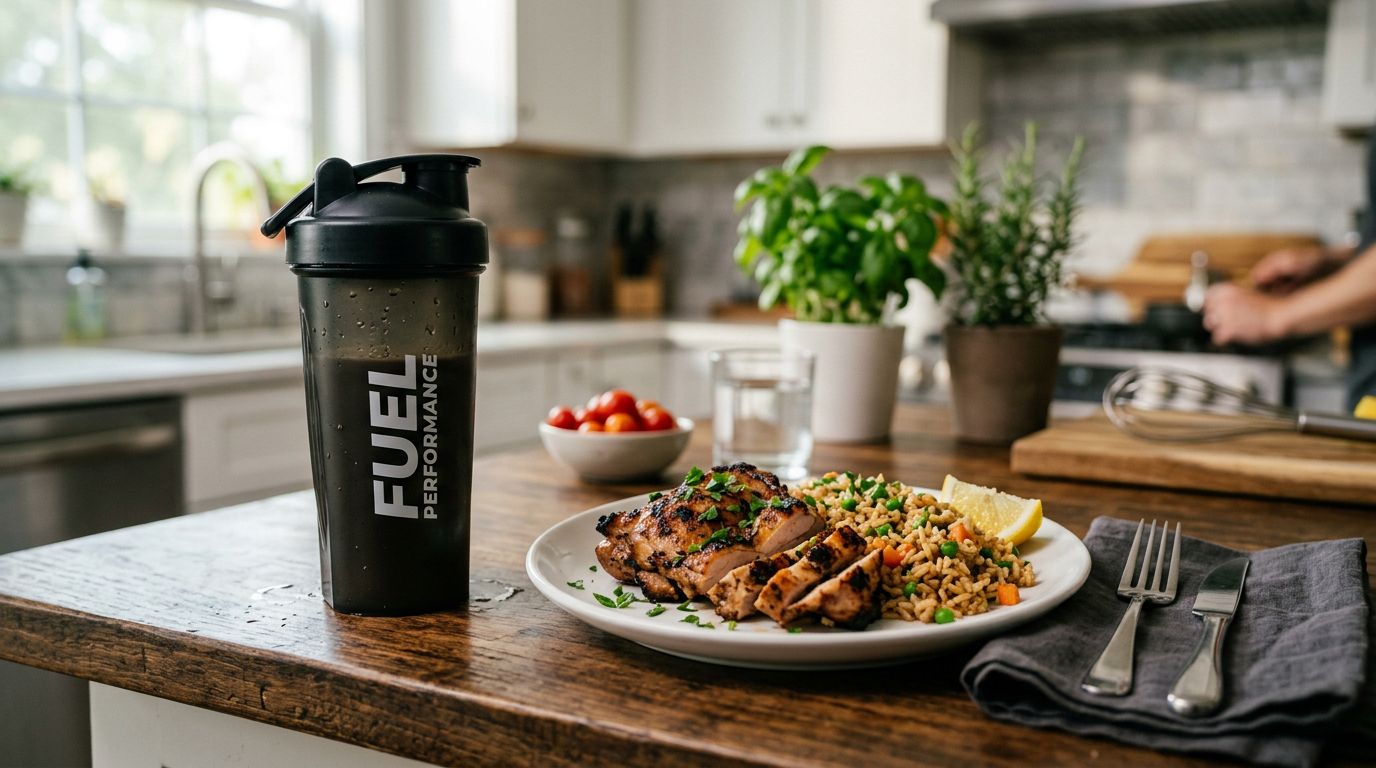
The smart play isn't picking one. It's eating 2–3 whole-food protein meals and using 1–2 shakes as bridges when food isn't practical — pre-meeting, post-workout, mid-flight, or as bedtime casein.
A Practical Day at 180g Protein
- Breakfast: 3 eggs + 1 cup Greek yogurt → 35g
- Mid-morning shake: 30g whey → 30g
- Lunch: 6 oz chicken + rice + vegetables → 45g
- Post-workout shake: 30g whey → 30g
- Dinner: 6 oz salmon + sweet potato → 40g
The Bottom Line
Whole food first, shakes second. Use the powder as a tool — not a crutch and not a forbidden food. The athletes who win long-term are the ones who can hit their protein target on every kind of day, in every situation.
Frequently Asked Questions
- Is whole food protein better than a shake?
- For muscle protein synthesis at a single meal, they're equivalent gram-for-gram. Whole food wins on satiety and micronutrients; shakes win on speed, portability, and cost per gram.
- Will I lose gains if I only eat real food?
- No. Plenty of pro athletes hit 200+g of protein daily without supplements. Shakes are a tool — not a requirement.
- How does absorption compare?
- Whey is absorbed in 60–90 minutes; chicken or beef takes 3–4 hours. Both deliver full leucine doses; the slower release of whole food is actually better for sustained MPS.
- Are shakes processed and unhealthy?
- Quality whey isolates and concentrates are minimally processed — essentially filtered milk protein. Stick to third-party tested brands (NSF, Informed Sport) and they're as clean as the chicken.