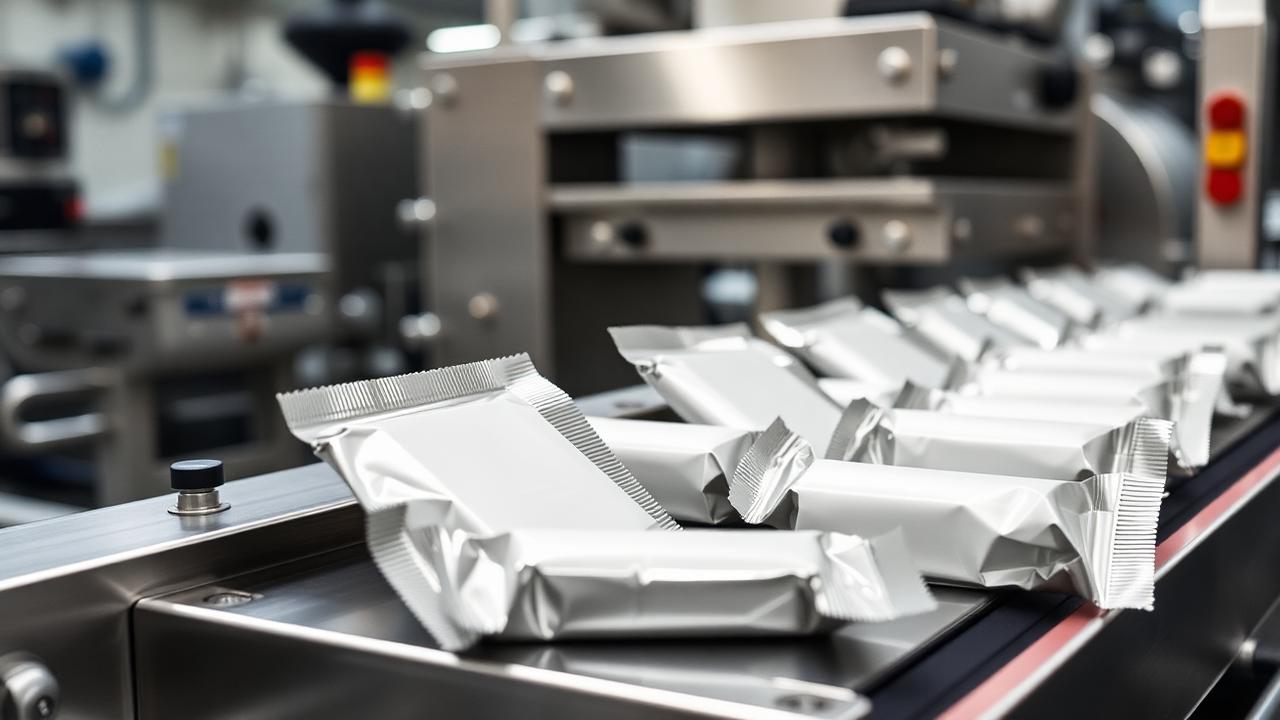
Bars, Snacks and Single-Serve: The Quiet Engineering Behind Arranti Flow Wrap
Nobody buys a protein bar because of the wrapper. But plenty of people stop buying one because of it — a bar that arrives greasy at the seam, a wrapper that won't tear, a printed panel scuffed grey by the time it reaches the counter, a whole case rejected because the seals wandered on a fast line.
Flow wrap is the least glamorous format in flexible packaging and one of the least forgiving. Arranti treats it accordingly.
Cold seal or heat seal. Up to 8 colors. Built for automation.
The Cold Seal Question
The first real decision in any bar program is cold seal versus heat seal, and it is a product decision before it is a cost decision.
Cold seal forms its bond under pressure alone. No heat touches the product, so chocolate coatings, yogurt drizzles and temperature-sensitive inclusions survive intact. It also runs faster, because the machine isn't waiting for jaws to reach temperature — a meaningful throughput gain on a high-volume bar line.
Heat seal uses temperature to fuse the film. It typically delivers a stronger hermetic seal and a lower film cost, which suits ambient-stable bars, snacks, powders and single-serve sachets where a few degrees at the jaw won't damage anything.
Arranti supplies both and specifies against the actual product — coating, fat content, water activity, shelf-life target and the machine it will run on.
Print That Survives the Journey
Up to 8 colors of high-definition flexo or digital print gives a single-serve wrapper enough range for photographic product imagery, bold flavour differentiation across a family of SKUs, and the full regulatory panel — all inside a footprint smaller than a postcard.
Durability matters more here than in almost any other format. Bars travel loose in boxes, tumble in vending machines, and sit in gym bags. Ink systems and film structures are chosen so the wrapper still looks like a premium product after that journey — the same durability thinking behind Arranti's packaging testing regime.
Engineered for the Machine, Not Just the Product
A flow wrap film that looks perfect as a sample can still destroy a production shift. Film gauge, coefficient of friction, seal window, registration mark placement and roll dimensions all have to match the wrapper it will run on. Get one wrong and you get seal creep, drift, film breaks and downtime measured in thousands of dollars an hour.
Arranti engineers flow wrap for automation and fast fulfilment, working from the customer's machine specification rather than a generic datasheet. That's the difference between packaging that arrives and packaging that runs.
Freshness Is the Whole Product
A protein bar is a moisture and oxygen problem wearing a wrapper. Too much moisture ingress and the texture turns; too little and the bar hardens into a brick. Oxygen degrades fats and flavours. Barrier structures are specified to hold the bar inside its texture window for the full stated shelf life, in the climates it will actually be stored in.
Small Runs and Big Programs
Flow wrap has traditionally punished small brands, because film minimums assumed national volume. Arranti supports both small and high-volume runs, with turnaround often under five weeks. A brand can launch two flavours, learn what sells, and scale the winner without a warehouse full of the loser's film.
Where It Applies
Protein and energy bars. Meal replacement and snack bars. Single-serve powder sachets and stick packs. Cookies, bites and portioned functional snacks. Sample and trial units bundled with larger purchases. Anything a customer eats in one sitting, on the move, from a wrapper that has to work perfectly and disappear.
Tell us the bar, the coating and the machine. We'll spec the film around all three.
Frequently Asked Questions
- What is the difference between cold seal and heat seal flow wrap?
- Cold seal bonds under pressure without heat, which protects heat-sensitive products like chocolate-coated bars and runs faster on line. Heat seal uses temperature to form the bond and generally offers a stronger barrier and lower film cost.
- Will the film run on my existing wrapper?
- That is the first question Arranti asks. Film gauge, slip properties, seal window and registration marks are specified to match your machine and line speed, then validated before a full production run.
- Can flow wrap handle small launch volumes?
- Yes. Arranti supports both small and high-volume runs, with turnaround often under five weeks, so a bar launch does not require committing to a year of film inventory.