Creatine for Women: The Most Underused Supplement in Female Fitness
Creatine is the most researched sports supplement on Earth — yet only about 22% of women who lift weights use it, compared to 74% of men. The reason is almost entirely cultural: persistent myths about bulk, bloat, and "men-only" labeling. Here's what the actual science says.
Why Women Respond Especially Well to Creatine
Women naturally store ~70–80% less creatine in muscle than men and consume less dietary creatine (it's mostly found in red meat). That means supplementation produces a larger relative jump in intramuscular creatine — and a measurable performance benefit.
A 2021 review in Nutrients covering 30+ female-only trials reported gains in strength (5–15%), high-intensity exercise capacity, lean mass, and post-exercise recovery — without significant changes in fat mass.
Beyond the Gym: Hormones, Mood, Cognition
- Menstrual cycle: Creatine appears to blunt the strength dip many women feel in the late luteal phase.
- Pregnancy & postpartum: Emerging research suggests creatine may support maternal and fetal brain energy metabolism (always clear with your doctor).
- Menopause: Combined with resistance training, creatine helps preserve bone mineral density and lean mass — both of which decline sharply post-menopause.
- Cognition & mood: A 2024 trial showed 5g/day reduced fatigue and improved memory scores in sleep-deprived women.
The Right Dose for Women
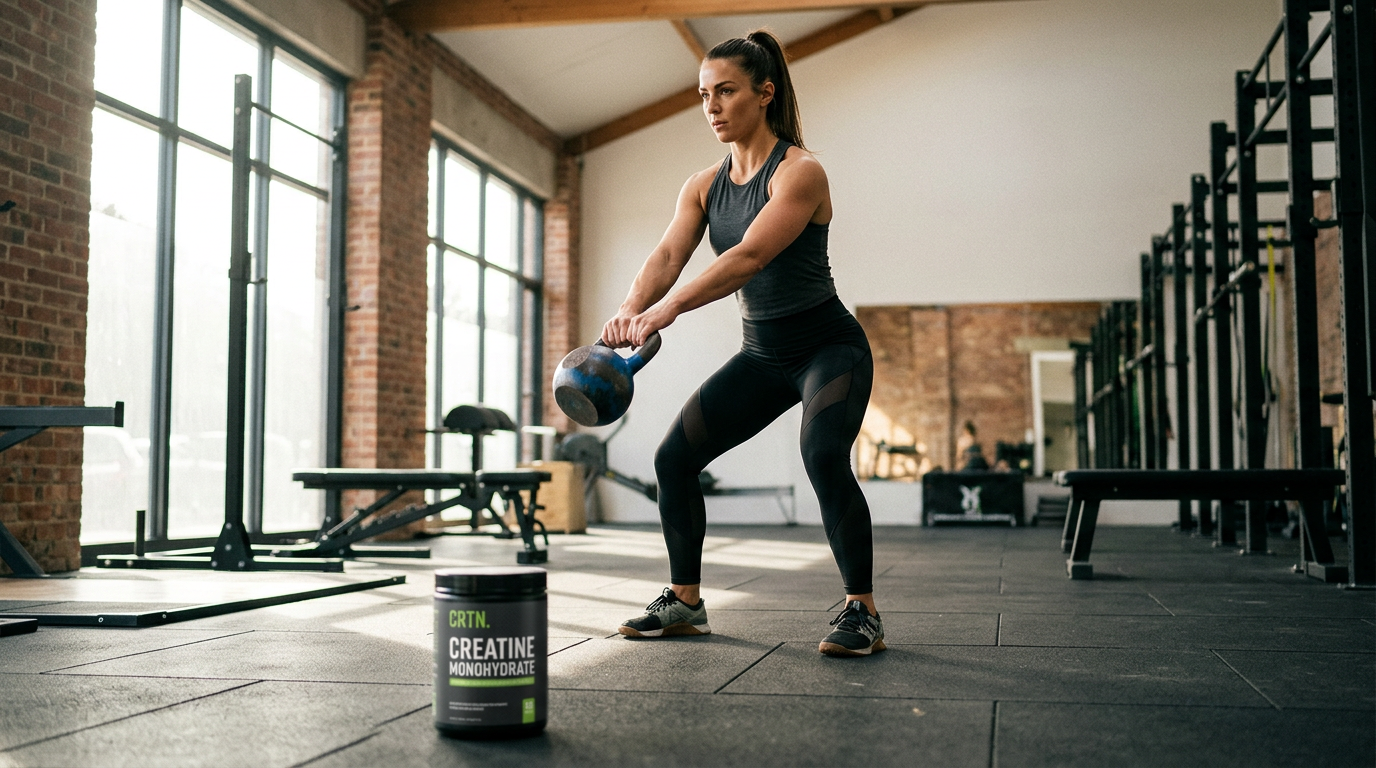
Skip the loading phase. 3–5 grams of creatine monohydrate per day, taken any time, with or without food. Mix it with your morning coffee, post-workout shake, or evening water — consistency matters more than timing.
The "Bulk" and "Bloat" Myths
Women don't get bulky from creatine because they don't have the testosterone to support it. The early "puffy" feeling is intracellular water — water inside the muscle cell, which actually makes muscles look fuller, not softer. Subcutaneous bloating is not a documented creatine effect.
The Bottom Line
If you train, you should probably take creatine. It's cheap, safe, and the most evidence-backed supplement available — and women may benefit even more than men. Choose a third-party tested monohydrate, take 3–5 g daily, and give it 4 weeks to saturate.
Frequently Asked Questions
- Will creatine make women bulky?
- No. Women don't have the testosterone levels required to add bulk from creatine. What you'll notice is more strength in the gym, slightly fuller-looking muscles, and faster recovery — not a different body shape.
- Does creatine cause weight gain in women?
- Most women see 1–2 lbs of intramuscular water weight in the first 2–3 weeks. This is inside the muscle, not under the skin, and is not fat. It typically stabilizes and many users report a leaner, more 'filled-out' look.
- Is creatine safe during the menstrual cycle?
- Yes. Research shows creatine may actually help offset the dip in strength and energy some women experience during the luteal and early follicular phases due to fluctuating estrogen and progesterone.
- How much creatine should women take?
- 3–5 g per day of creatine monohydrate. Women typically need slightly less than men due to lower lean mass. No loading phase is required — daily intake reaches full saturation in 3–4 weeks.
- Can women take creatine during pregnancy?
- Emerging research is positive, but talk to your OB-GYN before continuing or starting any supplement during pregnancy or breastfeeding.