Creatine Gummies vs. Powder: An Honest Comparison
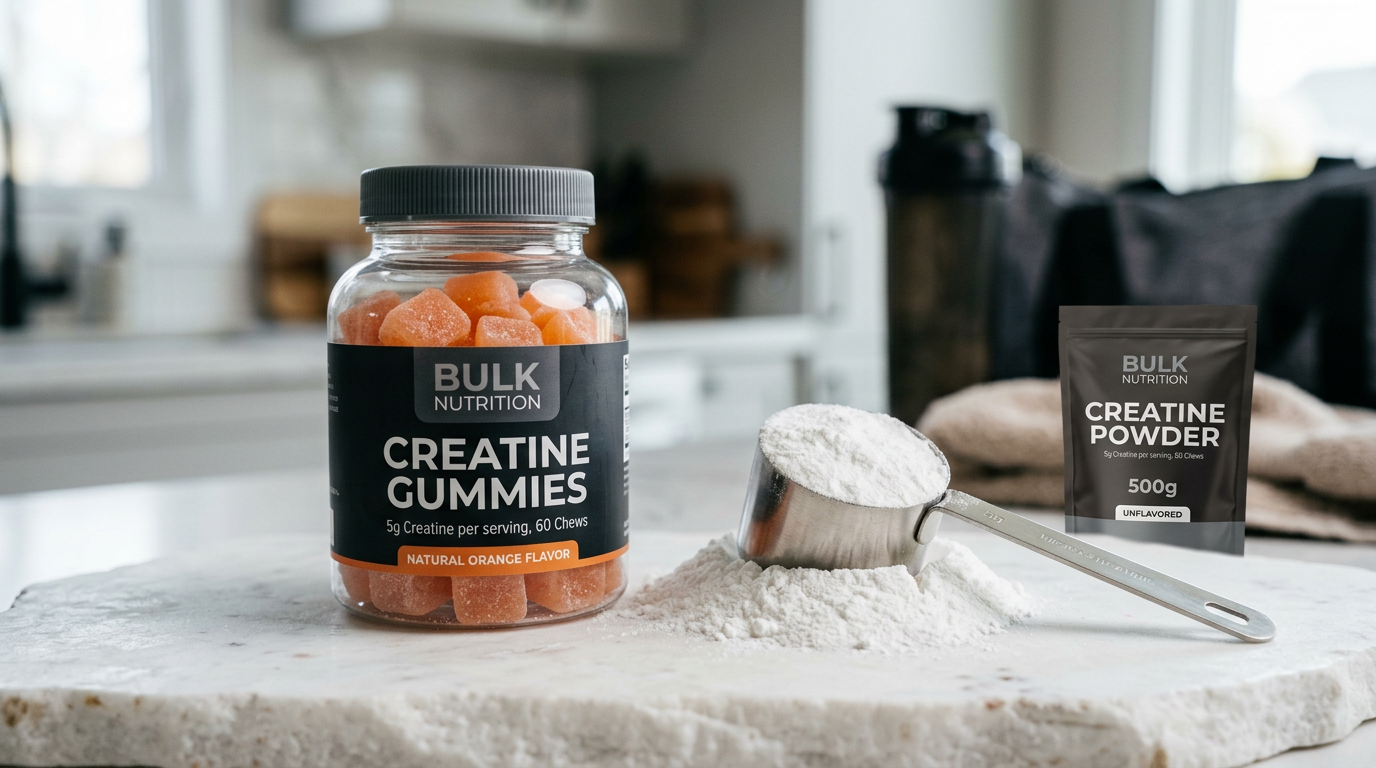
Creatine gummies exploded in 2024 — convenient, tasty, no scoop, no shaker. But the supplement industry has a long history of repackaging good ingredients into bad delivery formats. Here's whether gummies are the exception, and how to spot the brands worth buying.
The Core Question: Dose
The proven benefit of creatine comes from 3–5g of monohydrate per day. The molecule is identical in powder, capsule, or gummy. The only thing that matters is whether the serving actually delivers the labeled dose — and that's where many gummy brands fall short.
Common label trick: Big front-label "5g creatine" — but the serving size is 6 gummies and consumers take 2. Check the fine print before buying.
The Stability Problem
Creatine monohydrate slowly degrades to creatinine (an inactive byproduct) when exposed to moisture and heat. Powder stays stable in a sealed tub for years. Gummies — which contain water, gelatin or pectin, and are often shipped through hot warehouses — can lose meaningful potency.
A 2024 independent test of 12 popular creatine gummy brands found:
- 3 brands met label claim within 10%.
- 5 brands were 20–40% under label.
- 4 brands had more than 50% degradation.
Where Gummies Win
- Compliance: If you'll actually take gummies every day but skip powder, gummies win by default.
- Travel: No shaker, no mess, TSA-friendly.
- Taste: No "chalky water" objection.
- Teen athletes: Easier introduction for kids and teens learning supplement habits (with parent oversight).
Where Powder Wins
- Cost per gram: Bulk monohydrate runs ~$0.05/g. Quality gummies run ~$0.40–0.80/g — 8–15× more expensive.
- Stability: Far longer shelf life under normal storage.
- Dose flexibility: Easy to scale to 3g or 7g; gummies are locked to their serving size.
- Third-party testing: More established brands and more NSF/Informed-Sport options.
How to Buy Gummies (If You're Going to)
- Confirm 5g of creatine monohydrate per labeled daily serving (not per scoop or per piece).
- Look for a recent third-party Certificate of Analysis (COA).
- Prefer brands with high turnover (Amazon best-sellers, etc.) so you receive fresh product.
- Avoid "creatine HCl" or "creatine ethyl ester" gummies — monohydrate is the only form with strong human evidence.
- Store at room temperature, away from heat and humidity.
The Bottom Line
Powder is still the highest-value, most reliable form of creatine. But if gummies are what you'll actually take every day, that beats perfect powder you'll skip. Pick a verified brand, hit your 5g daily, and let the saturation do its job.
Frequently Asked Questions
- Do creatine gummies actually work?
- Yes — if they contain a full 5g of creatine monohydrate per daily serving and are manufactured to maintain stability. The active molecule is identical; only the delivery vehicle changes.
- How many gummies equal 5g of creatine?
- Most reputable brands require 4–6 gummies to hit 5g. Many cheap brands deliver only 1–2g per serving — read the label carefully.
- Are gummies less stable than powder?
- Creatine slowly converts to inactive creatinine in moisture. Independent lab tests in 2024 found several gummy brands had degraded by 20–60% before sale. Stick to fresh, well-reviewed brands.
- Is the sugar in gummies a problem?
- Most contain 2–4g sugar per serving — negligible in a daily diet. Avoid if tracking carbs strictly (keto).