Gut Health for Athletes: Probiotics and Prebiotics in Sports Nutrition
A strong gut means better absorption and immunity. The gut microbiome—trillions of microbes in your digestive tract—influences nutrient absorption, immune function, inflammation, and energy metabolism. For athletes, intense training disrupts this balance, but probiotics and prebiotics can restore it and elevate performance.
The Athlete Gut Microbiome: Exercise Effects
High-volume training alters the microbiome in complex ways. Endurance athletes show enriched short-chain fatty acid (SCFA) producers—like butyrate, which fuels colonocytes and reduces inflammation—but prolonged stress depletes diversity and raises pathogen levels. GI distress affects 30–70% of endurance athletes, with "leaky gut" allowing endotoxins to trigger systemic inflammation and fatigue.
Gut microbes ferment carbohydrates into SCFAs (acetate, propionate, butyrate), modulating immunity via regulatory T cells. Dysbiosis correlates with reduced performance, while balanced microbiomes track with better VO2max and lower creatine kinase (muscle damage marker). Moderate exercise improves diversity positively, but overtraining reverses these gains.
Key Strains for Recovery
Lactobacillus plantarum (TWK10)
The standout performer. This strain shows dose-dependent endurance gains with reduced fatigue and inflammation. A 2026 Bayesian meta-analysis reports μSMD 0.82 for overall performance enhancement—a medium-to-large effect size.
Bifidobacterium Species
Improves muscle strength and mass in interventions lasting 12+ weeks. Enhances recovery by reducing creatine kinase levels post-exercise and supporting gut barrier integrity.
Multi-Strain Blends
Combining Lactobacillus + Bifidobacterium produces small-to-moderate overall performance boosts (μSMD 0.38–0.45), with the strongest gains in aerobic outcomes—VO2max improvements reached μSMD 2.21 in cycling tests. Both single and multi-strain formulas work, but multi-strain offers broader benefits.
Recovery-Specific Benefits
Probiotics lower post-exercise inflammation, attenuate delayed onset muscle soreness (DOMS), and speed muscle torque return. S. thermophilus + B. breve combinations show particular promise after eccentric exercise. L. rhamnosus GG reduces GI issues, while Saccharomyces boulardii aids immunity.
Foods vs. Supplements
Probiotic Foods
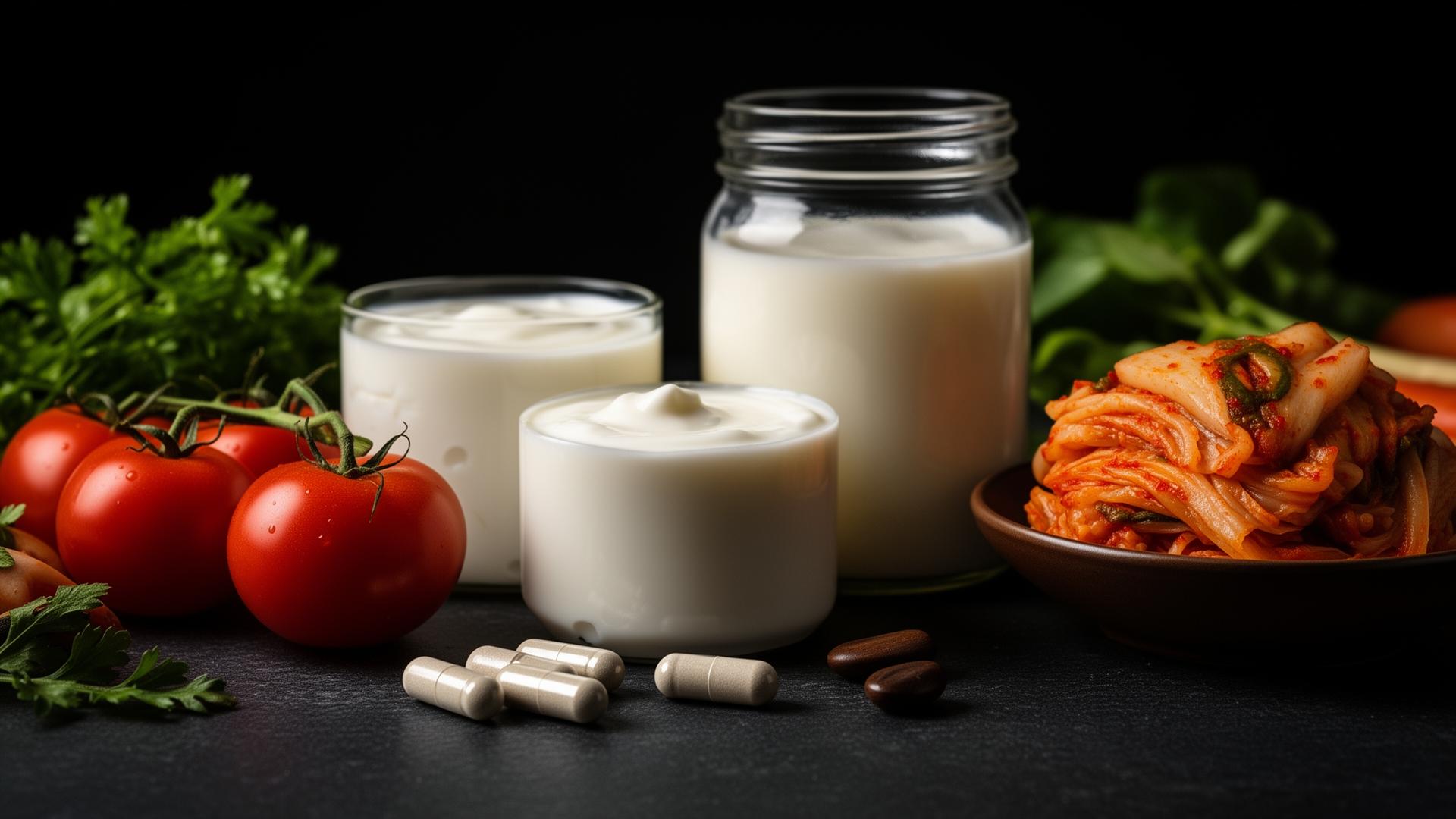
Yogurt, kefir, sauerkraut, and kimchi provide natural probiotics alongside prebiotic fibers (inulin in onions/garlic, resistant starch in cooled potatoes). Fermented foods support microbial diversity but deliver inconsistent doses—you can't guarantee specific strain counts.
Probiotic Supplements
Supplements offer precise strains and doses with enteric coating for gut survival. Meta-analyses favor supplements for measurable performance gains, particularly at ≥30 billion CFU for aerobic improvements. Combining prebiotic fibers (FOS, GOS) amplifies probiotic effects.
Practical approach: Daily yogurt or kefir for baseline diversity, plus a targeted multi-strain supplement for performance-specific benefits.
Impact on Performance
- Endurance: VO2max improvements of +1.55 mL/kg/min; time-to-exhaustion gains across studies.
- Strength/Recovery: Reduced CK by ~45 IU/L; better isometric torque post-muscle damage.
- Immunity: Fewer upper respiratory infections; enhanced gut barrier function during heavy training blocks.
Optimal protocol: medium-dose (10⁹–10¹¹ CFU/day), 4–12 weeks duration. Trained individuals benefit most from short-term supplementation. Risks are rare—occasional initial GI adjustment—but always choose third-party tested products (NSF/Informed-Sport).
Implementation
Start with a multi-strain probiotic (10–50 billion CFU) daily alongside fermented foods. Track GI symptoms and performance metrics over 4–8 weeks. Pair with prebiotic-rich foods (onions, garlic, bananas, oats) to feed beneficial bacteria. A stronger gut means better nutrient absorption, faster recovery, and sustained training gains.
Frequently Asked Questions
- Do probiotics actually improve athletic performance?
- Yes. A 2026 Bayesian meta-analysis of 21 trials (N=685) found multi-strain probiotics produce medium effect sizes for endurance (VO2max μSMD 2.21 in cycle tests) and small-moderate gains overall. Benefits include reduced inflammation, faster recovery, and fewer GI issues.
- Which probiotic strains are best for athletes?
- Lactobacillus plantarum TWK10 shows the strongest dose-dependent endurance gains. Bifidobacterium species improve muscle strength and mass over 12+ weeks. Multi-strain Lactobacillus + Bifidobacterium blends offer the broadest performance benefits.
- How much probiotic should athletes take?
- Medium dose of 10⁹–10¹¹ CFU/day yields the most significant effects. Higher isn't always better—the sweet spot is 10–50 billion CFU daily for 4–12 weeks. Choose third-party tested products (NSF/Informed-Sport).
- Should I get probiotics from food or supplements?
- Both. Fermented foods (yogurt, kefir, kimchi, sauerkraut) provide natural probiotics and prebiotics but with inconsistent dosing. Supplements offer precise strains and doses. Daily yogurt plus a targeted supplement provides optimal synergy.
- How does intense exercise affect gut health?
- High-volume training can reduce microbial diversity, increase gut permeability ('leaky gut'), and cause GI symptoms in 30–70% of endurance athletes. Moderate exercise improves diversity, but overtraining depletes it and raises inflammation.