Hydration Strategies for Extreme Sports: Beyond Water
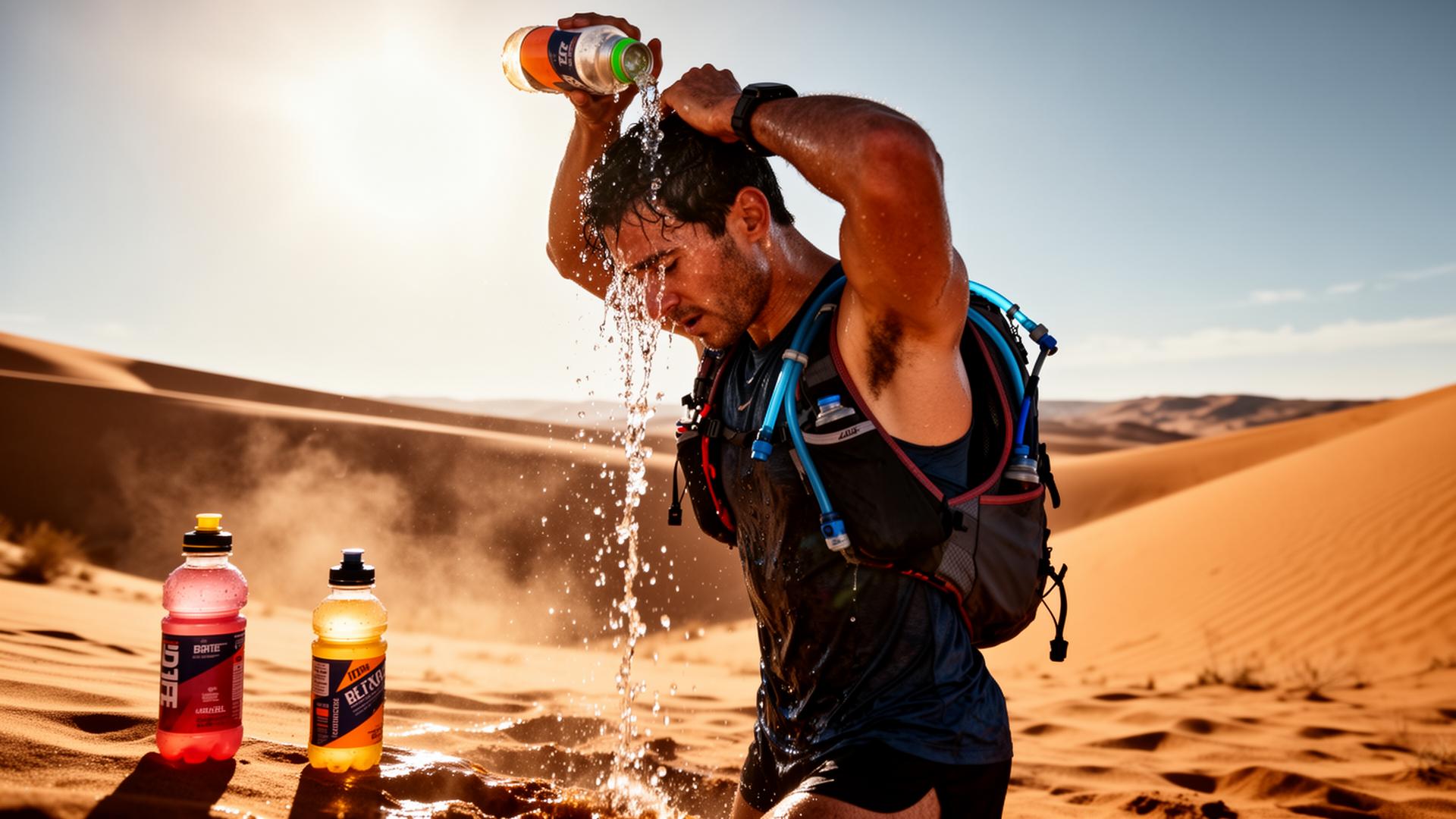
In extreme sports—ultra-running, adventure racing, high-altitude mountaineering—dehydration risks are amplified by high sweat rates (1–3 L/hour), environmental stress, and GI limitations. Dehydration exceeding 2% body mass impairs endurance, cognition, and thermoregulation. Water alone isn't enough; advanced electrolyte strategies and hyperhydration protocols are essential for peak performance in extreme conditions.
Electrolyte Ratios
Sodium is the key electrolyte for fluid retention, with sweat losses ranging from 20–80 mmol/L depending on genetics, acclimatization, and intensity. ACSM and NATA guidelines recommend 300–600 mg sodium per hour in heat lasting over 2 hours.
Optimal Ratios
Target a Na:K ratio of 2:1 to 3:1, with added magnesium and calcium for cramp prevention. High-sodium drinks (500–1,000 mg Na/L) increase plasma volume by 2–12% and reduce urine output by 40% compared to water. In ultra-endurance events, a hybrid approach—combining thirst-guided and programmed intake—prevents both over- and under-hydration.
Personalized Sodium
Sweat testing (sodium concentration patches) allows athletes to customize their electrolyte formula. Research shows personalized sodium strategies optimize fluid balance and reduce thirst elevation during heat-based high-intensity training. A practical starting mix: 500–1,000 mg sodium, 200–400 mg potassium, 50–100 mg magnesium per liter.
Hyperhydration Protocols
Pre-exercise hyperhydration uses osmotic aids to expand plasma volume before competition begins. The protocol: 5–10 mL/kg fluid 4 hours prior, combined with sodium and optional glycerol for enhanced retention.
Evidence
Systematic reviews show sodium/glycerol hyperhydration boosts exercise capacity by 14–26%, increases plasma volume by 3.5–12.6%, and lowers both heart rate and core temperature. A 2025 study in female athletes found sodium hyperhydration reduced mass loss and sweat rate during heat cycling, with stronger effects in the follicular phase of the menstrual cycle.
Practical Protocol
2 hours pre-exercise: 500–1,000 mg sodium + glycerol (1 g/kg body weight) in 500–750 mL fluid. Test tolerance in training first—glycerol can cause GI discomfort in some athletes. For sodium-only protocols, consume 500–1,000 mg sodium with 500 mL fluid 2–3 hours before start.
Monitoring Tools
- Body mass: Pre/post weigh-ins targeting no more than 1–2% loss during exercise.
- Urine color/specific gravity: Pale yellow (SG <1.020) indicates adequate hydration.
- Thirst perception: Avoid severe thirst—it signals you're already behind.
- Sweat testing: Sodium concentration patches for personalized formulas.
The 2025 ultra-endurance consensus recommends a hybrid strategy—combining thirst-guided drinking with programmed intake targets—as the optimal approach for long-duration events. No single marker is sufficient; use multiple indicators together.
Implementation
Start with sweat testing to determine your sodium loss rate. Build a personalized electrolyte mix targeting your specific losses. Practice hyperhydration protocols in training before race day. During competition, use the hybrid approach: set a baseline intake schedule (e.g., 400–800 mL/hour) and adjust based on thirst, conditions, and body weight changes at aid stations.
Frequently Asked Questions
- How much sodium do athletes need per hour in extreme heat?
- 300–600 mg sodium per hour for sessions over 2 hours in heat. Sweat sodium losses vary widely (20–80 mmol/L), so personalized sweat testing is ideal. High-sodium drinks (500–1,000 mg Na/L) increase plasma volume and reduce urine output by 40% compared to water alone.
- What is hyperhydration and does it work?
- Hyperhydration is pre-loading fluid with osmotic aids (sodium/glycerol) 2–4 hours before exercise. Systematic reviews show it boosts exercise capacity 14–26%, increases plasma volume 3.5–12.6%, and lowers heart rate and core temperature. Protocol: 5–10 mL/kg fluid + 500–1,000 mg sodium ± glycerol (1 g/kg) 2 hours pre-exercise.
- Should I drink to thirst or on a schedule?
- Hybrid approach is best for extreme sports. Thirst-driven alone risks under-drinking in ultra-endurance; programmed alone risks over-drinking and hyponatremia. Combine scheduled intake targets with thirst cues, adjusting for conditions—the 2025 ultra-endurance consensus recommends this hybrid strategy.
- How do I monitor hydration during competition?
- Pre/post body mass changes (target ±1–2% loss), urine color (pale yellow, specific gravity <1.020), thirst perception, and sweat testing patches for sodium rate. No single marker is perfect—use multiple indicators together for the best picture.
- What electrolyte ratio should I use?
- Sodium to potassium ratio of 2:1 to 3:1, with added magnesium and calcium for cramp prevention. Sodium is the priority electrolyte for fluid retention. A practical mix: 500–1,000 mg sodium, 200–400 mg potassium, 50–100 mg magnesium per liter of fluid.