Creatine: The Complete Guide for Athletes
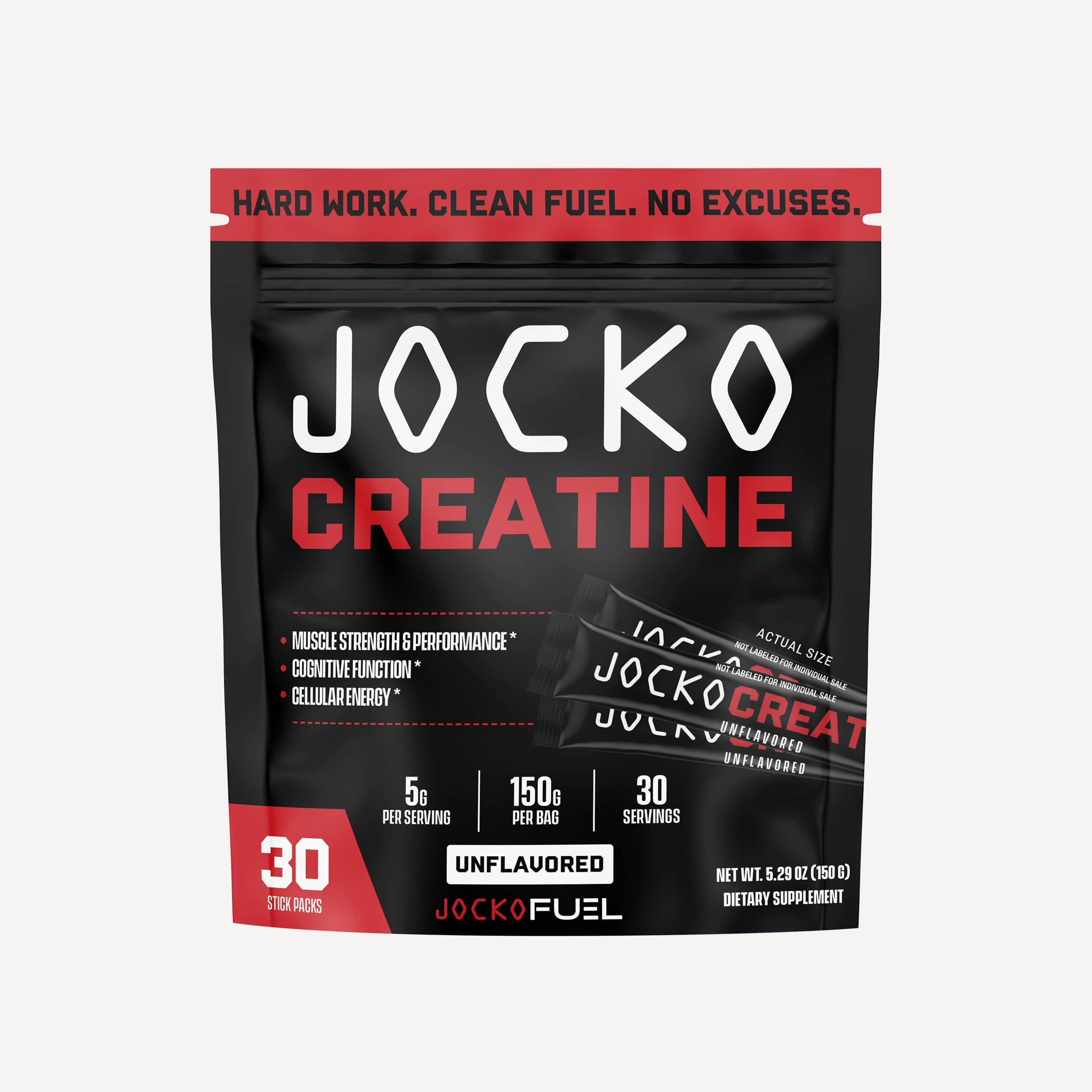
Creatine is one of the most researched and effective supplements in sports nutrition. Unlike trend-based products that cycle in and out of popularity, creatine has decades of data supporting its safety and performance benefits.
For athletes, creatine is not just about muscle size. It supports:
- Strength output
- Repeated sprint performance
- Muscle recovery
- Lean mass retention
- Neuromuscular efficiency
This guide breaks down exactly what creatine does, how it works, who should use it, how much to take, and how to choose the right form.
What Is Creatine?
Creatine is a naturally occurring compound stored primarily in skeletal muscle. It helps regenerate ATP — the body's primary energy currency during short, explosive efforts.
Your body produces creatine naturally, and it's also found in red meat and fish. Supplementation increases intramuscular creatine stores beyond normal dietary levels.
How Creatine Works
During high-intensity efforts (sprinting, lifting, jumping), ATP is rapidly depleted. Creatine helps regenerate ATP more quickly. This leads to:
- Improved power output
- Better performance across repeated efforts
- Increased training volume
- Enhanced recovery between sets
Over time, this translates to better adaptation.
Proven Benefits of Creatine
1. Increased Strength
Creatine consistently improves maximal strength in resistance-trained individuals.
2. Improved Power Output
Particularly effective for football, baseball, basketball, and sprint athletes.
3. Increased Lean Mass
Primarily through increased training capacity — not water weight alone.
4. Recovery Support
Reduces muscle damage markers in some studies.
5. Potential Cognitive Benefits
Emerging evidence suggests neurological support under stress.
Types of Creatine
Creatine Monohydrate (Gold Standard)
Most studied. Most effective. Most affordable.
Creatine HCL
Improved solubility but limited evidence of superiority.
Buffered Creatine
No strong data showing benefit over monohydrate.
Creatine Blends
Marketing-heavy, rarely superior.
Bottom Line: Creatine monohydrate remains the best-supported option.
How Much Creatine Should Athletes Take?
Two approaches:
Loading Protocol
- 20g daily for 5–7 days
- Then 3–5g daily
Standard Protocol
- 3–5g daily consistently
Both work. Loading saturates faster.
When to Take Creatine
Timing matters less than consistency. Best practice:
- Daily use
- With a meal or post-workout
Who Should Use Creatine?
Ideal for:
- Strength athletes
- Team sport athletes
- Sprinters
- Power-based sports
Less useful for:
- Ultra-endurance athletes (context dependent)
Common Creatine Myths
- "Creatine causes bloating" — Minor water retention inside muscle, not under skin.
- "Creatine harms kidneys" — Unsupported in healthy individuals.
- "Creatine is a steroid" — False.
Frequently Asked Questions
- Is creatine safe?
- Yes. Creatine is one of the most studied supplements available. No strong evidence shows kidney damage in healthy individuals.
- Does creatine cause bloating?
- Minor water retention occurs inside muscle cells, not under the skin. Most athletes don't notice visible bloating.
- Is creatine a steroid?
- No. Creatine is a naturally occurring compound found in meat and fish. It has no hormonal effects.
- Do I need to load creatine?
- No. Loading (20g/day for 5–7 days) saturates stores faster, but 3–5g daily reaches the same levels over 3–4 weeks.