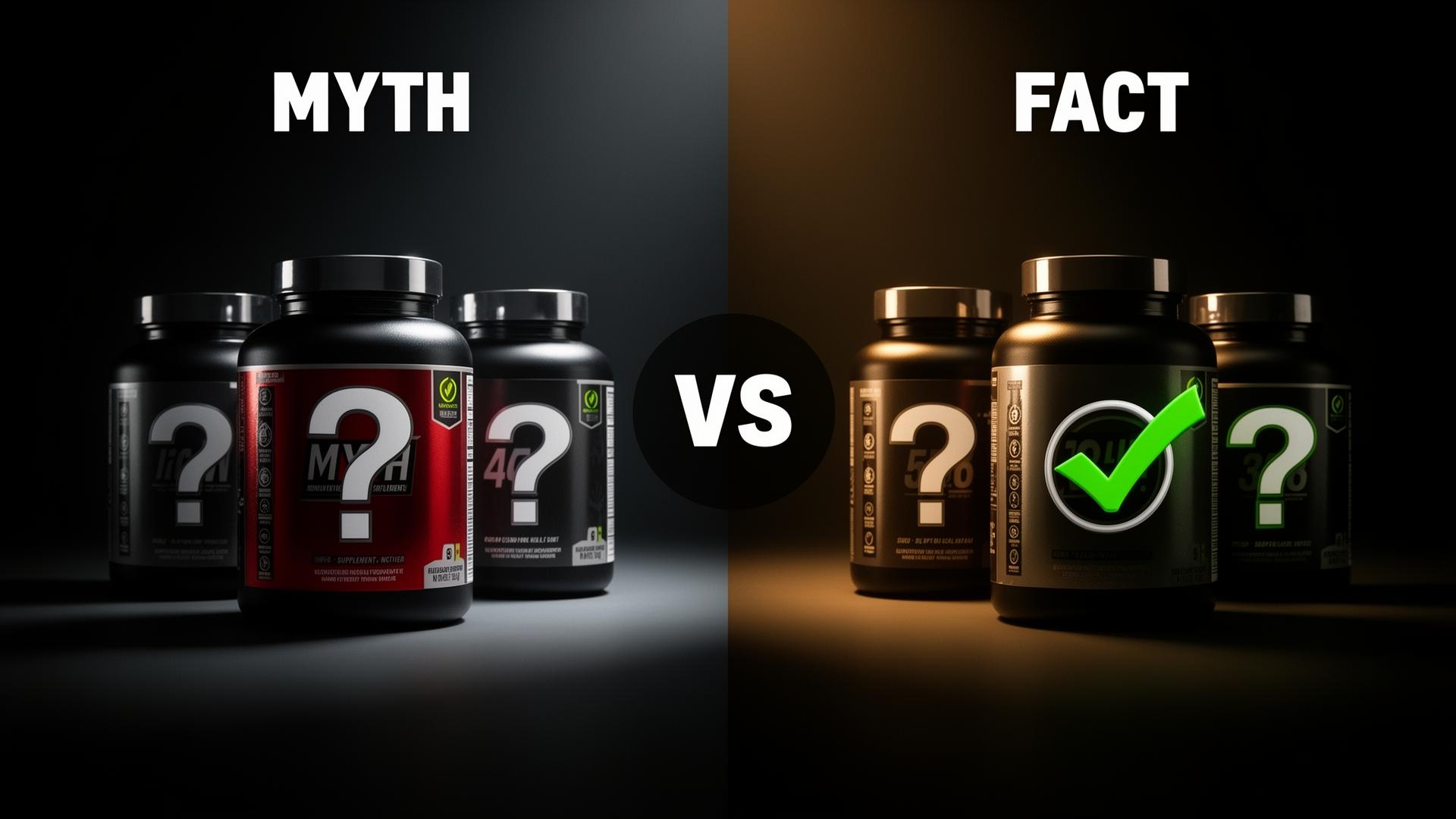
The Truth About Supplement Myths
The supplement industry generates billions in revenue — and just as many myths. Some are harmless misunderstandings. Others prevent athletes from using effective tools. Here's what the research actually says.
Myth: Creatine Damages Kidneys
This is the most persistent myth in sports nutrition. Over 500 peer-reviewed studies show creatine monohydrate is safe in healthy individuals. Elevated creatinine on blood tests is an expected marker — not kidney damage.
Myth: High Protein Intake Is Dangerous
For healthy individuals with no pre-existing kidney disease, protein intakes up to 1.0g per lb bodyweight are well-supported and show no adverse effects on kidney function.
Myth: "Natural" Is Always Better
The words "natural" and "synthetic" describe origin — not quality. What matters is dose, purity, and bioavailability. Many effective supplements are synthesized for consistency and safety.
Myth: Detox Supplements Work
Your liver and kidneys handle detoxification. No supplement has been shown to meaningfully enhance this process. "Detox" products are marketing, not medicine.
How to Evaluate Claims
- Look for peer-reviewed research, not testimonials
- Check ingredient doses against clinical studies
- Be skeptical of extreme language ("revolutionary," "breakthrough")
- Trust transparent brands with third-party testing
Frequently Asked Questions
- Does creatine damage your kidneys?
- No. Over 500 studies show creatine monohydrate is safe for healthy individuals. Elevated creatinine levels on blood tests are expected and not harmful.
- Is too much protein bad for you?
- For healthy individuals, intakes up to 1.0g per lb bodyweight are well-supported. There is no evidence of kidney damage from high protein intake in healthy people.
- Are natural supplements better than synthetic?
- Not necessarily. What matters is the dose, purity, and bioavailability — not whether the compound is 'natural' or 'synthetic.'