Sports Nutrition on a Budget: Effective Supplements Under $20
Elite performance doesn't require expensive stacks. The most evidence-based supplements—creatine, protein, multivitamins—are available for under $20/month. Generics match branded efficacy when they use the same active ingredients, and smart meal prep stretches your nutrition budget further. This guide covers the highest-ROI picks and cost-saving strategies.
Generic vs. Branded: The Truth
Generic supplements from brands like Nutricost and BulkSupplements use the same monohydrate forms, isolate processes, and active compounds as premium brands charging 2–3x more. Third-party tested options are widely available on Amazon and Walmart. The science is clear: no difference in absorption or effects when the active ingredient is pure and identical.
Price Comparison
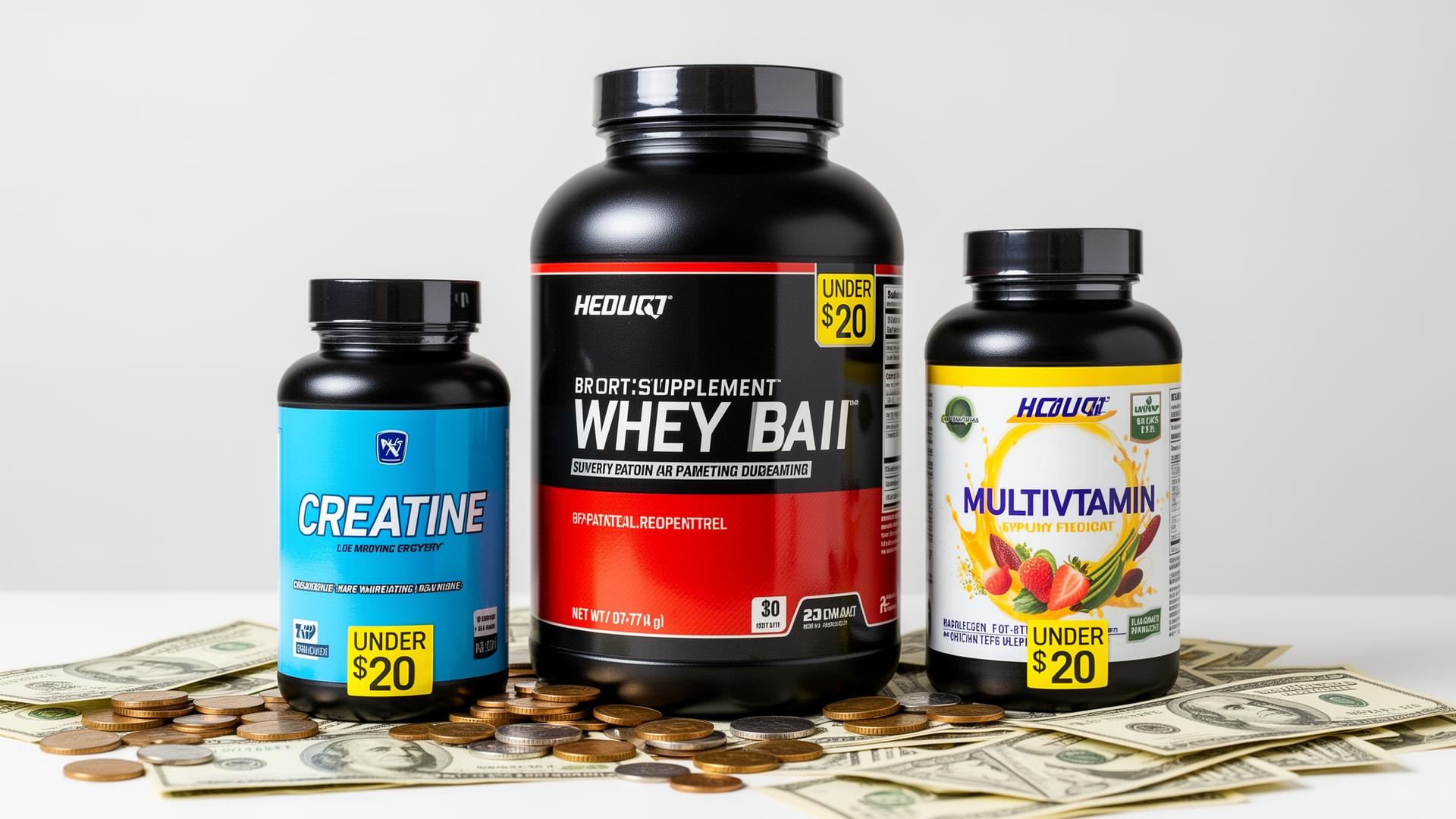
- Creatine Monohydrate: Generic $10–15/300–500g (months supply) vs. Premium $25–40
- Whey Protein Isolate: Generic ~$15–20/lb vs. Premium $30+/lb
- Multivitamin: Nature Made/Kirkland ~$10–15/100+ servings vs. Premium $30–50
High-ROI Picks
Creatine Monohydrate — The King of Value
At $0.10–0.20/serving, creatine delivers 5–15% strength gains and improved power output. Take 5 g daily—no loading needed, no cycling required. This single supplement has more supporting research than any other sports nutrition product, and it costs less per month than a single coffee.
Whey Protein — Convenient Muscle Repair
20–40 g post-workout supports muscle protein synthesis and recovery. Generic whey isolate at $15–20/lb provides the same amino acid profile and leucine content as premium brands. Blend with water, milk, or add to oats for a complete meal.
Basic Multivitamin — Cover Your Bases
A simple multivitamin covers potential gaps in vitamin D, zinc, magnesium, and B vitamins—all critical for athletes. Kirkland and Nature Made offer USP-verified formulas at $10–15 for 100+ servings. Not a performance booster, but an insurance policy against deficiency.
Honorable Mentions
- Caffeine tablets: $5–10 for 100+ servings, 200 mg each. More precise than coffee for pre-workout dosing.
- Beta-alanine: $10–15 for a month supply. Buffers lactic acid for endurance in high-intensity work.
Meal Prep Tips
Supplements fill gaps, they don't replace food. Batch cook oats, eggs, rice, and beans for high-protein meals at under $2/serving. Add cheap seasonal vegetables and frozen fruits. This approach saves 30–50% compared to eating out or buying pre-made meals, and provides the micronutrient foundation that supplements are designed to complement.
Weekly Budget Meal Plan
- Breakfast: Oats + eggs + banana (~$1.50)
- Lunch: Rice + beans + frozen vegetables (~$1.75)
- Dinner: Chicken thighs + sweet potato + greens (~$2.50)
- Post-workout: Whey protein + milk (~$1.00)
The Bottom Line
Prioritize whole foods, then layer in creatine ($10–15/month) as your first supplement. Add whey protein for convenience and a multivitamin for insurance. This three-supplement stack costs under $40/month total and covers the most evidence-backed bases in sports nutrition. Everything else is optimization—nice to have, but not essential for results.
Frequently Asked Questions
- What's the most cost-effective supplement for athletes?
- Creatine monohydrate, hands down. At $0.10–0.20 per serving ($10–15 for a 3–6 month supply), it delivers 5–15% strength gains and improved power output. No other supplement matches its cost-to-benefit ratio.
- Are generic supplements as good as name brands?
- Yes, when they use the same active ingredients. Generic creatine monohydrate is chemically identical to premium brands. Look for third-party testing (NSF, Informed-Sport) regardless of brand. The savings can be 50–70% without any loss in efficacy.
- Can you build muscle on a budget diet?
- Absolutely. Batch cooking oats, eggs, rice, and beans delivers high-protein meals for under $2/serving. Supplements fill specific gaps (creatine for strength, whey for convenience) but whole foods should form the foundation. You can save 30–50% vs. eating out or buying pre-made meals.
- What supplements should I prioritize under $20/month?
- In order of ROI: 1) Creatine monohydrate ($10–15/500g), 2) Whey protein ($15–20/lb for generic), 3) A basic multivitamin ($10–15/100 servings). These three cover the most evidence-backed bases for under $40/month total, or pick any single one for under $20.
- Is cheap whey protein safe?
- Yes, if third-party tested. Generic whey isolate uses the same manufacturing processes as premium brands. Check for heavy metal testing and protein content verification. Brands like Nutricost and BulkSupplements offer tested products at fraction of premium prices.