Electrolytes for Youth Athletes: A Parent's Practical Guide
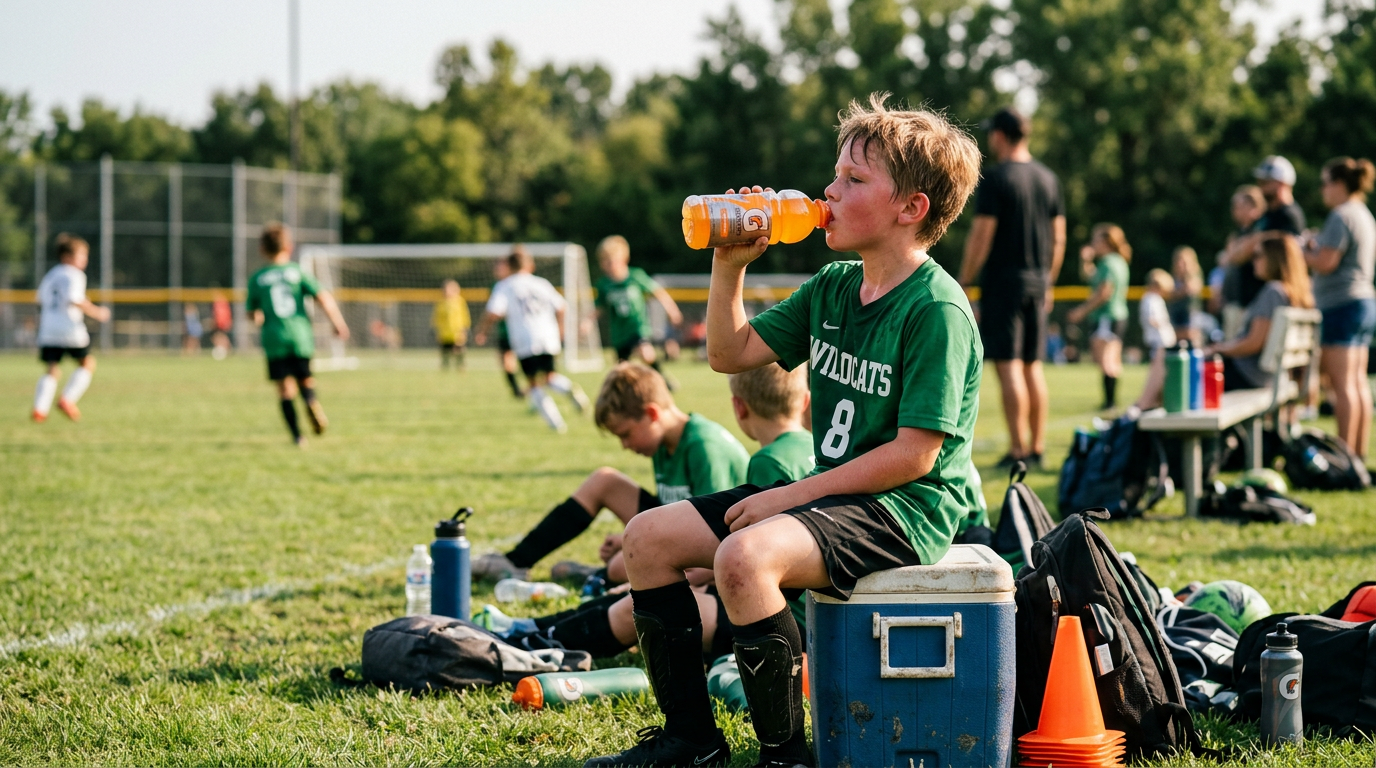
Kids aren't small adults — they thermoregulate differently, sweat at lower rates per pound of bodyweight (but with higher core-temperature rise), and often forget to drink. For parents of youth athletes, getting hydration right matters more than getting any single supplement right. Here's what the pediatric and sports medicine literature actually supports.
Why Kids Are at Higher Dehydration Risk
- Higher surface-area to body-mass ratio — heat enters faster from the environment
- Lower sweat rate per pound — less efficient cooling
- Less developed thirst awareness — kids underestimate fluid needs
- Distraction during play — they skip water breaks if not reminded
Water vs Electrolyte Drinks: When Each Is Right
Water Is Enough When:
- Activity is under 60 minutes
- Weather is mild (below 75°F/24°C)
- The child ate a normal meal beforehand
Electrolytes Are Important When:
- Outdoor practice in heat or humidity
- Two-a-day camp practices
- Sessions over 60–90 minutes
- The child is a heavy/salty sweater (white streaks on skin/clothes)
Smart Dosing for Kids
Most commercial electrolyte powders are designed for 150–200 lb adults. For youth athletes:
- Kids 6–10: 1/3 to 1/2 packet of standard electrolyte mix, in 16+ oz water
- Kids 11–14: 1/2 to 2/3 packet
- Teens 15+: Adult dosing is generally fine
Aim for roughly 300–600 mg sodium per hour during hot or extended play. Encourage 4–8 oz of fluid every 15–20 minutes.
What to Look for on the Label
- Real electrolytes: Sodium, potassium, magnesium. Skip products that are 95% sugar with token mineral content.
- Modest sugar: Some carbs help absorption (sodium-glucose co-transport) — 5–14 g per serving is fine. 25+ g per serving is dessert.
- No artificial dyes: Optional, but many parents prefer it.
- Caffeine-free: Always for under-18s.
What to Avoid
- Pre-workout drinks — high stimulant content, not appropriate for youth.
- Energy drinks (Monster, Red Bull, Bang) — AAP recommends against any caffeine intake from these in children.
- Daily sports-drink habit — for non-active days, it's just sugary water.
Warning Signs of Dehydration
- Dark yellow urine
- Headache, dizziness
- Cramping, especially in calves or stomach
- Decreased performance/coordination late in practice
- Flushed face, unusually rapid breathing
A Practical Game-Day Plan
- 2 hours before: 12–16 oz water with a light meal
- 30 min before: 6–8 oz water
- Every 15–20 min during play: 4–8 oz water or diluted electrolyte drink
- After: Water + a balanced snack with sodium (pretzels, cheese, deli turkey, fruit)
The Bottom Line
For youth athletes, hydration trumps supplements every time. Water is enough for short, cool sessions. Add diluted electrolytes for hot or long practices. Skip energy drinks and adult-strength pre-workouts entirely — and when in doubt, ask your pediatrician.
Frequently Asked Questions
- Should kids drink electrolyte drinks?
- Yes for prolonged or hot-weather sport (over 60 minutes or in heat). For shorter, cooler activities, water is enough. Avoid adult-strength formulas — kids need lower sodium per ounce.
- How much sodium is safe for a child athlete?
- Roughly 300–600 mg/hour during heavy/hot training is reasonable for kids 10+, scaled down for younger or smaller children. Always context-dependent — talk to a pediatrician for individual guidance.
- Are sports drinks like Gatorade okay for kids?
- Acceptable for active sport in heat. Not appropriate as a daily beverage — they're high in added sugar and calories that contribute to dental issues and weight gain when not earned through activity.
- Can kids take electrolyte powders meant for adults?
- Use half-strength. Adult sodium doses (1000 mg+) are too high for most children. Brands like Nuun, LMNT, or Liquid IV should be diluted further for kids under 12.