Heat Acclimation Protocol: The 10–14 Day Plan for Hot-Weather Racing
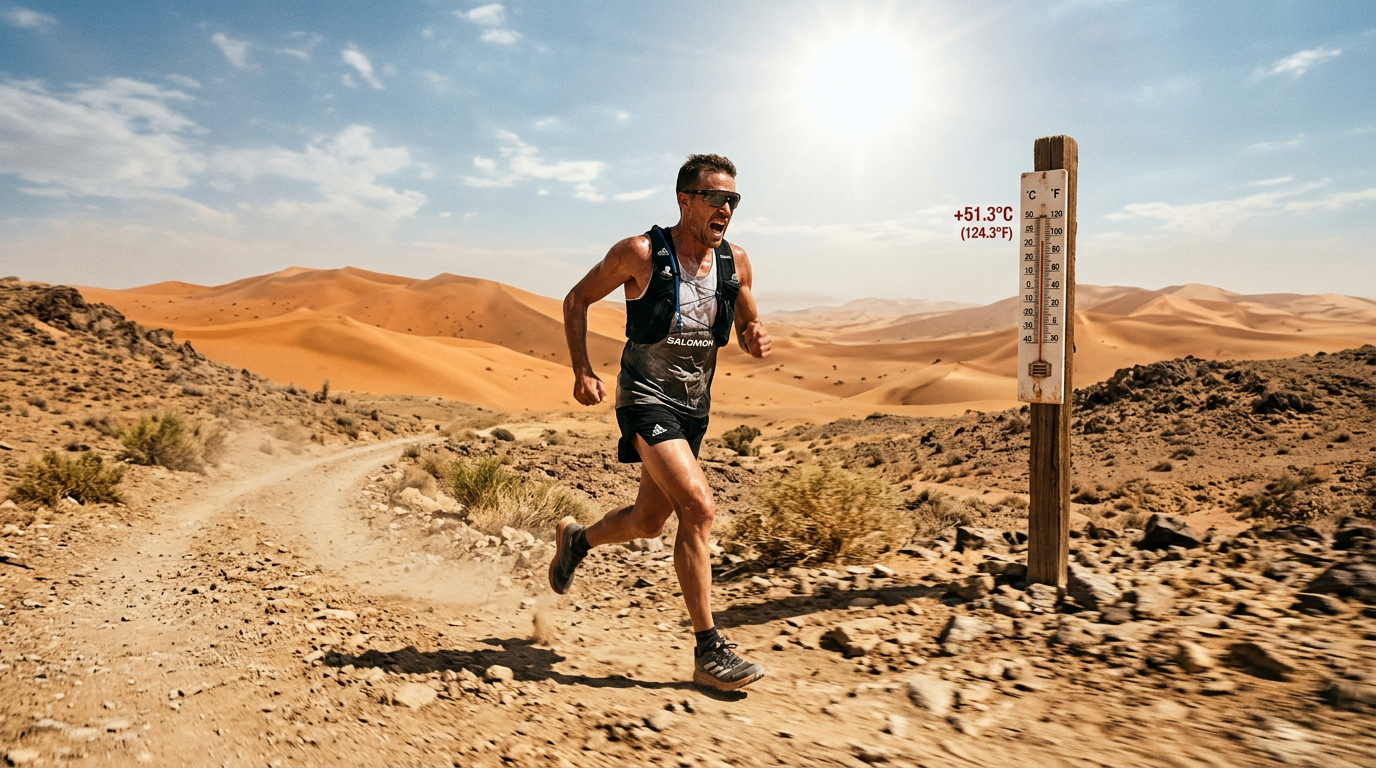
Heat acclimation is one of the highest-leverage ergogenic interventions in endurance sport. Ten days of properly executed heat exposure expands plasma volume 5–10%, improves sweat rate and efficiency, lowers core body temperature at any workload, and can translate to 2–8% performance gains in the heat.
The Physiological Adaptations
- Days 1–5: Plasma volume expansion begins. Lower heart rate at any workload.
- Days 5–10: Sweat starts earlier, more dilute (less sodium loss per liter), higher total volume.
- Days 10–14: Full sweat gland adaptation, lowered core temp, cardiovascular efficiency locked in.
The Protocol
Active Heat Training (Preferred)
- Duration: 60–90 min sessions, once daily.
- Environment: Outdoor heat or an indoor hot room (85–100°F).
- Intensity: Zone 2 (conversational). This isn't the block to add speed work — heat is the stimulus.
- Duration of the block: 10 consecutive days minimum, 14 optimal.
Passive Heat (Sauna)
- 4 sessions/week, 30 minutes at 175–195°F.
- Post-workout timing is best (compounds the stimulus).
- Gives 60–80% of active heat adaptation.
Hydration & Sodium Support
- Daily fluid: Add 1–1.5 L over normal baseline.
- Sodium: 7–10 g/day total. Extra salt on food, an electrolyte drink post-session.
- Weigh-in/weigh-out: Track daily body mass to ensure hydration is being maintained. Losses greater than 2% mean under-replacement.
Race-Week Taper
- Complete the last heat session 3–5 days before the race.
- Continue the higher sodium and fluid intake through the taper.
- Race-day: extra electrolytes pre-race, aggressive intra-race sodium (750–1,500 mg/hour depending on sweat rate).
The Bottom Line
Heat acclimation is not optional for hot-weather racing. Ten to fourteen days of properly-dosed heat exposure is one of the biggest, cheapest performance levers available.
Frequently Asked Questions
- Can sauna replace heat training?
- Yes — 4 sauna sessions/week (30 min at 175–195°F post-workout) provides 60–80% of the physiological adaptation of true active heat training. Excellent option when the race destination is hot but your home training environment isn't.
- How long does heat acclimation last?
- Adaptations start to decay by day 7 without heat exposure and are mostly gone by day 21. Book heat training so it ends 3–5 days before your race — long enough to be fresh, short enough to keep the adaptation.
- Do I need extra supplements during heat training?
- Yes: increase sodium (7–10 g/day total), maintain magnesium (400 mg), add potassium-rich foods, and eat 20% more calories for the metabolic cost. Standard multivitamin remains fine.