Magnesium for Sleep and Recovery: The Form Most Athletes Get Wrong
Magnesium is involved in over 300 enzymatic reactions—including muscle contraction, nerve signaling, energy production, and sleep regulation. Most athletes are mildly deficient and don't know it. The confusing part isn't whether to supplement—it's which form. The answer depends entirely on your goal.
Why Athletes Run Low
- Sweat losses: 50–100 mg per hour of hard training
- Modern soils contain less magnesium than 50 years ago
- Refined grains and processed foods strip magnesium
- Coffee, alcohol, and stress increase urinary excretion
- ~50% of Americans don't hit the RDA from food alone
The Forms, Ranked by Use Case
Magnesium Glycinate (Best for Sleep, Recovery, Anxiety)
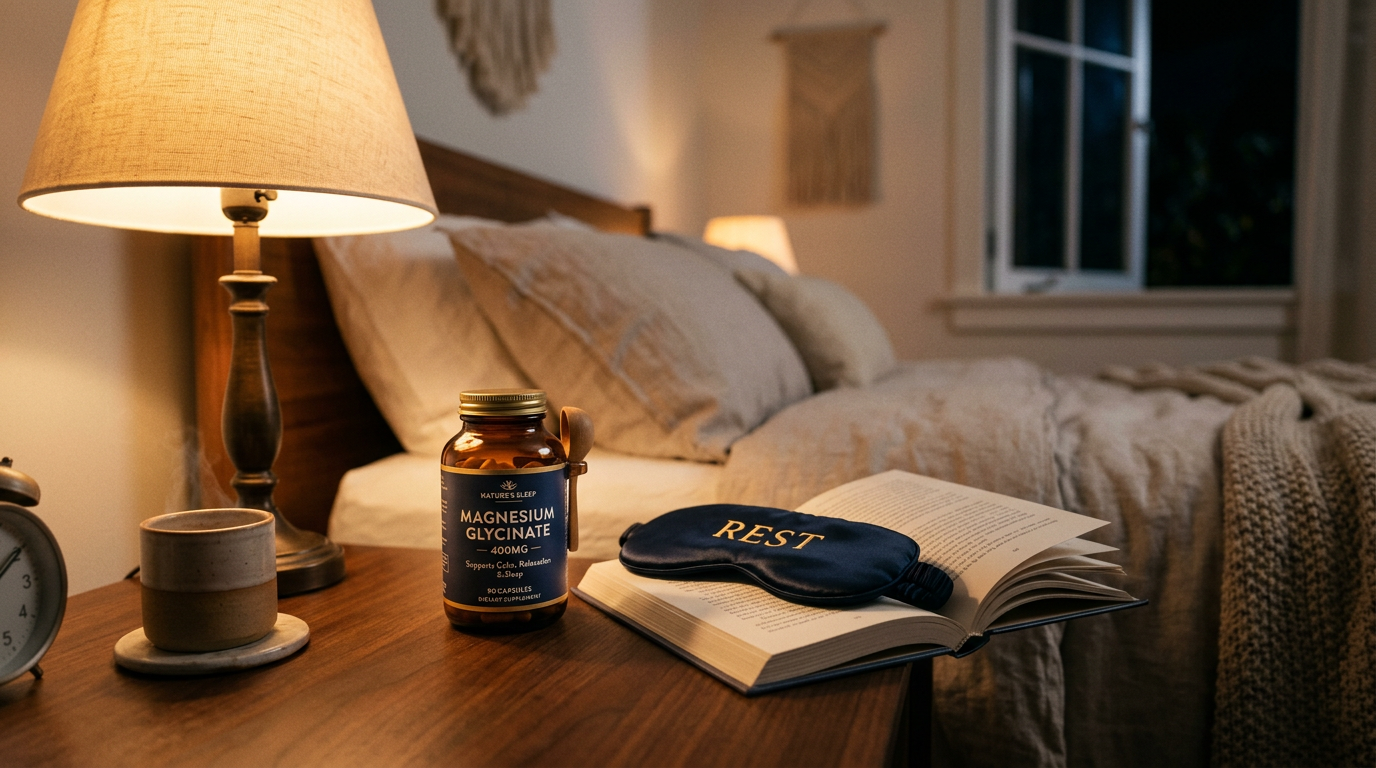
Magnesium bound to the amino acid glycine. High bioavailability, no GI side effects, and glycine itself promotes deep sleep and reduces anxiety. The clinical favorite for athletes targeting sleep quality and muscle relaxation.
Dose: 300–400 mg elemental magnesium, 30–60 minutes before bed.
Magnesium L-Threonate (Best for Cognition)
The only magnesium form proven to cross the blood-brain barrier efficiently. Studies show improvements in memory, learning, and possibly mood. Marketed as "Magtein."
Dose: 1,000–2,000 mg of threonate (which yields ~144 mg elemental magnesium). More expensive than other forms.
Magnesium Citrate (Best for Absorption + Mild Laxative)
Cheap, well-absorbed, mildly stimulating to the bowel. Good general-purpose magnesium—but the laxative effect can be a problem at higher doses.
Dose: 200–400 mg elemental magnesium. Split doses if you get loose stools.
Magnesium Malate (Best for Energy & Muscle Fatigue)
Bound to malic acid, which plays a role in the Krebs cycle. Some evidence it helps with fibromyalgia and chronic fatigue. Used by some endurance athletes.
Magnesium Oxide (Skip It)
~4% bioavailability. Cheap fillers in many multivitamins. Useful only as a short-term laxative—not as a sleep or recovery supplement.
Topical Magnesium / Epsom Baths (Mostly Placebo)
The skin-absorption claim is weak. Epsom baths feel great and may help with relaxation through heat and the act of soaking—but they don't meaningfully raise body magnesium status.
The Athlete's Magnesium Protocol
- Daily target: 400–500 mg total elemental magnesium (food + supplement)
- Best form for athletes: Magnesium glycinate at night (300–400 mg)
- Timing: 30–60 minutes before bed for sleep optimization
- Stack: Pairs well with zinc (ZMA-style) and ashwagandha for recovery
- Food sources: Pumpkin seeds, dark chocolate, almonds, spinach, black beans
Signs You're Low
- Difficulty falling or staying asleep
- Frequent muscle cramps (especially nocturnal calf cramps)
- Elevated resting heart rate without obvious cause
- Anxiety, irritability, or feeling "wired but tired"
- Eye twitches
- Caffeine intolerance worse than usual
The Bottom Line
For sleep and recovery, choose magnesium glycinate—300–400 mg of elemental magnesium, 30–60 minutes before bed. Skip the oxide. The right form, at the right dose, at the right time will produce noticeable sleep and recovery improvements within 1–2 weeks.
Frequently Asked Questions
- What's the best magnesium for sleep?
- Magnesium glycinate. It's the most bioavailable form for sleep applications—the glycine itself has calming, sleep-promoting effects. 300–400 mg 30–60 minutes before bed is the evidence-based protocol.
- Is magnesium citrate or glycinate better?
- Citrate is best for constipation relief and general absorption. Glycinate is best for sleep, anxiety, and muscle recovery without GI side effects. Threonate is the only form that crosses the blood-brain barrier well—useful for cognition.
- How much magnesium should athletes take daily?
- RDA is 400–420 mg/day for men, 310–320 mg for women. Athletes lose extra magnesium through sweat and have higher demands—aim for 400–500 mg/day from food + supplements combined.
- Does magnesium help with muscle cramps?
- Magnesium supports normal muscle function, but the cramp evidence is mixed. Sweat-driven sodium loss is usually the bigger cramp culprit. Magnesium helps most when baseline intake is low or training volume is high.
- Should I avoid magnesium oxide?
- Magnesium oxide is cheap and poorly absorbed (~4% bioavailability). It's effective as a laxative but a poor choice for sleep, recovery, or actually raising body magnesium status. Skip it for athletic applications.