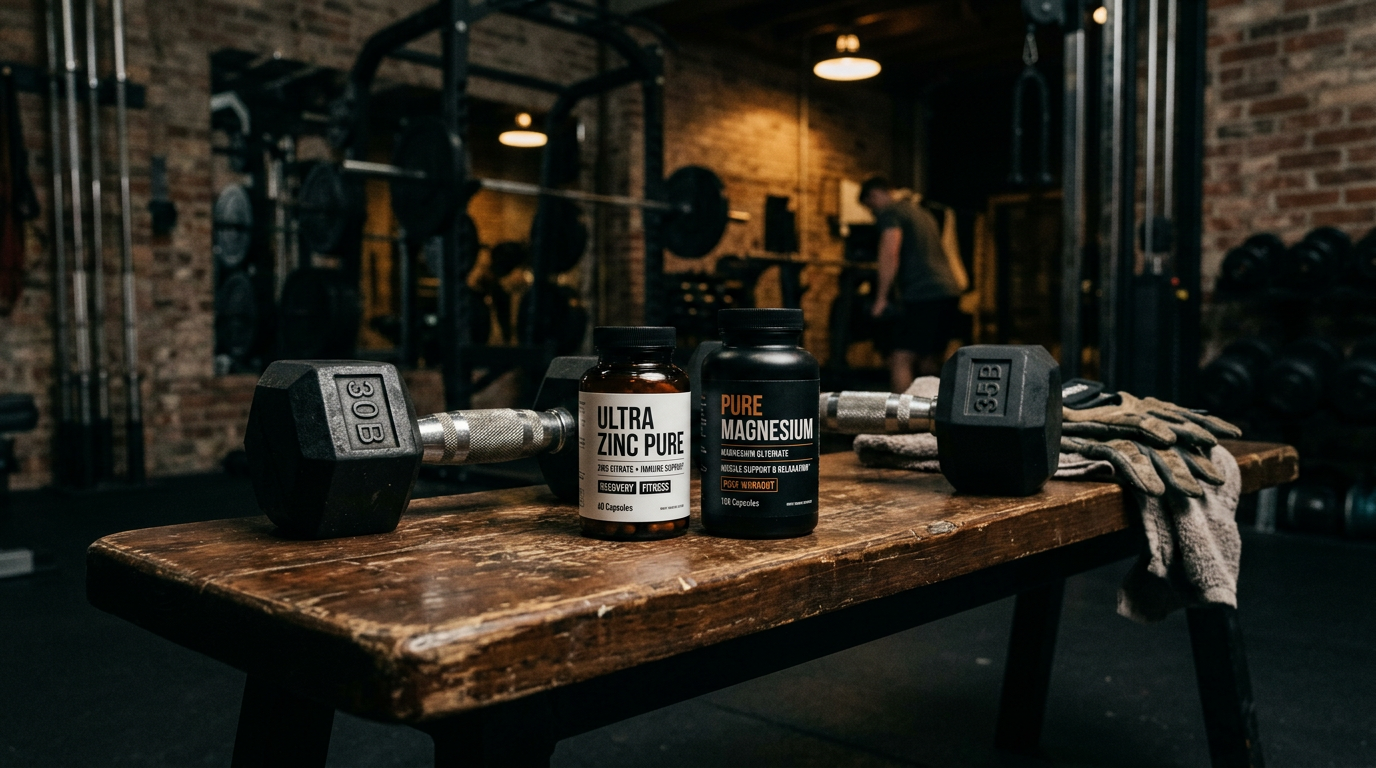
Zinc and Magnesium: The Two Minerals Athletes Burn Through
You can train perfectly, eat clean, and sleep eight hours — and still feel run-down. For a huge percentage of athletes, the missing piece is something most multivitamins under-dose: zinc and magnesium.
Why Athletes Run Low
- Sweat losses: Heavy training drops both minerals through perspiration.
- Diet patterns: Low red-meat intake (zinc) and minimal leafy greens / nuts (magnesium) leave gaps.
- Stress and cortisol: High training loads accelerate urinary magnesium loss.
- Common medications: PPIs, diuretics, and some antibiotics impair absorption.
What Each Mineral Actually Does
Zinc
- Required for testosterone production and immune function.
- Cofactor in 300+ enzymatic reactions, including muscle repair.
- Marginal deficiency reduces strength gains and lengthens illness recovery.
Magnesium
- Critical for muscle relaxation (contraction needs calcium; relaxation needs magnesium).
- Regulates GABA receptors — directly affects sleep onset and depth.
- Supports ATP production and glucose metabolism for endurance.
ZMA: Does It Live Up to the Hype?
ZMA combines zinc (30 mg), magnesium aspartate (450 mg), and vitamin B6 (10–15 mg). The original 2000 trial in NCAA football players showed dramatic testosterone gains — but follow-up studies in non-deficient athletes showed no effect. The verdict: ZMA restores normal hormone function if you're deficient. It is not a T-booster for everyone.
How to Dose Smartly
- Zinc: 15–30 mg/day. Take with food to avoid nausea. Don't exceed 40 mg long-term — it suppresses copper absorption.
- Magnesium: 300–400 mg/day. Glycinate or citrate. Take 30–60 min before bed for sleep benefit.
- Split them: Zinc at lunch, magnesium at night. They compete at the absorption level when high-dosed together.
Food-First Sources
Zinc: Oysters (the king), beef, pumpkin seeds, lentils, cashews.
Magnesium: Pumpkin seeds, almonds, spinach, dark chocolate (70%+), black beans, avocado.
The Bottom Line
Zinc and magnesium aren't sexy supplements, but for active people they're two of the highest-ROI additions to a daily routine. Get a blood panel if you suspect deficiency, then supplement to fill the gap — and sleep, recovery, and immunity all tend to improve within weeks.
Frequently Asked Questions
- Are most athletes deficient in zinc and magnesium?
- Yes. Sweat losses, restrictive diets, and high training loads make both common deficiencies. Surveys show 40–70% of athletes consume below recommended levels of magnesium and 25–50% of zinc.
- Does ZMA boost testosterone?
- Only if you're deficient. ZMA restores normal T levels in zinc-deficient men but doesn't raise T above baseline in already-sufficient individuals. Skip the marketing.
- What's the best form of magnesium?
- Glycinate (sleep, anxiety, absorption), citrate (digestion), threonate (cognitive). Avoid oxide — it's poorly absorbed and mainly a laxative.
- Can I take zinc and magnesium together?
- Yes, but high-dose zinc (>50 mg) competes with magnesium absorption. Split them: zinc earlier in the day, magnesium at night.