Berberine for Athletes: The Glucose-Disposal Supplement
Berberine had a viral moment as "nature's Ozempic" — a comparison that overpromises. For athletes the more interesting question is more grounded: can a cheap plant alkaloid meaningfully improve carb tolerance, support body composition, and help time-restricted eaters keep glucose stable?
What Berberine Does
Berberine activates AMPK — the same energy-sensing pathway exercise activates. The downstream effects: improved insulin sensitivity, better glucose uptake into muscle, modest reductions in fasting glucose and triglycerides, and small improvements in body composition in metabolically compromised populations.
The Athlete-Relevant Effects
- Improved glucose disposal: Higher-carb meals partition more efficiently into muscle glycogen vs adipose storage.
- Modest fat loss support: A 2020 meta-analysis showed roughly 2 kg additional fat loss vs placebo over 12 weeks in overweight subjects.
- Better fasted training tolerance: Anecdotal but consistent — fasted athletes report steadier energy when stacking berberine with their pre-workout coffee.
What It Won't Do
It won't replace caloric deficit, won't dramatically reshape body composition in lean trained athletes, and won't outperform metformin in clinical contexts (it underperforms it modestly). It's a metabolic helper, not a transformation.
How to Take It
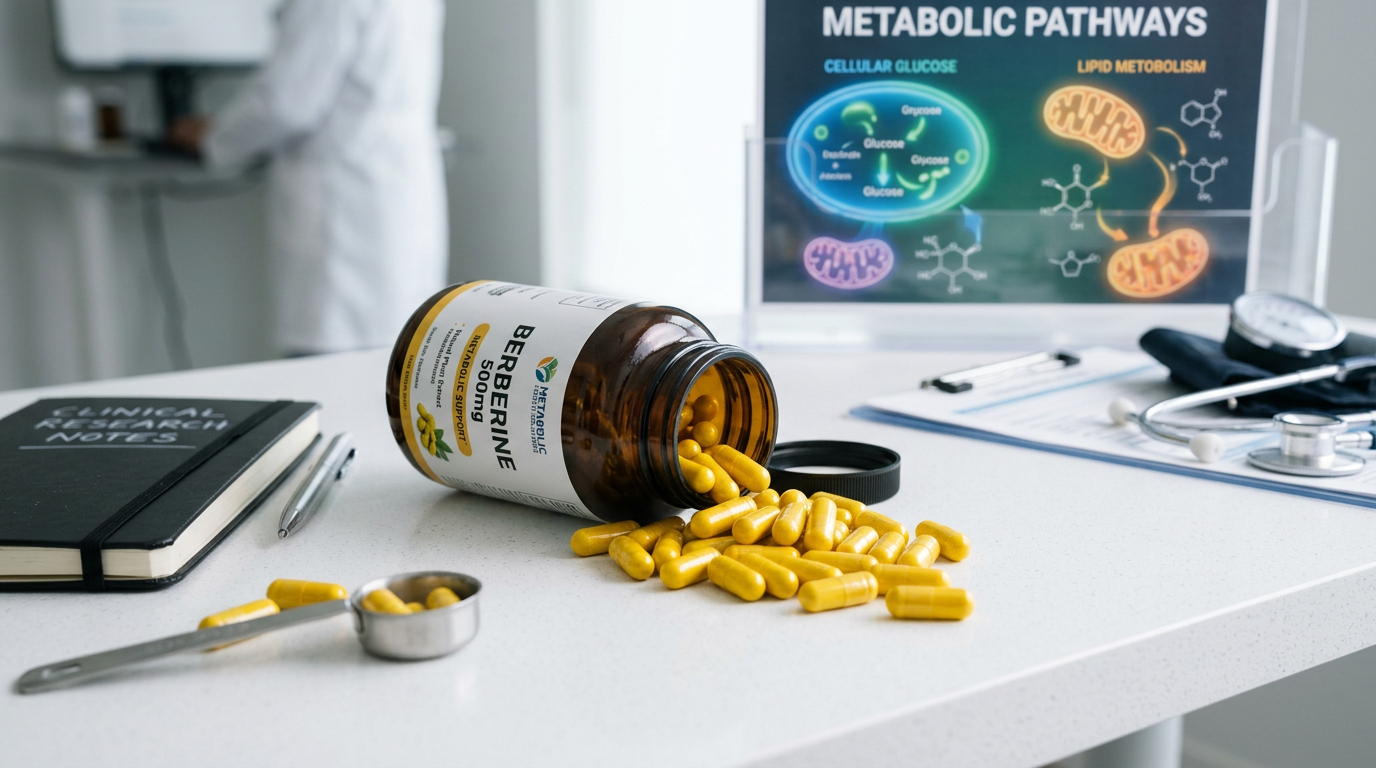
500 mg, 3× per day with meals — totaling 1,500 mg/day. Take with the highest-carb meals if your goal is glucose disposal. Start with 500 mg once daily for a week to assess GI tolerance.
Cycling vs Continuous
Most clinical trials run 8–12 weeks continuously without diminishing returns. A 2-weeks-off, 8-weeks-on cycle is reasonable but not strictly necessary based on the data.
Who Should Skip It
Anyone on glucose or blood-pressure medications — talk to a physician first; the additive effect can drop levels too far. Pregnant or nursing athletes. Anyone with chronic GI issues, given berberine's gut-microbiome effects.
The Bottom Line
Berberine isn't a miracle. It's a cheap, mechanistically interesting metabolic supplement with modest effects on glucose disposal and body composition. For athletes running high-carb plans or trying to recomp, it has earned a real spot — at 1,500 mg/day in split doses with meals.
Frequently Asked Questions
- Is berberine actually like Ozempic?
- No. The 'nature's Ozempic' headline oversells it. Berberine modestly improves insulin sensitivity and fasting glucose — meaningful but nowhere near GLP-1 drug effects.
- Effective dose?
- 500 mg, 3× per day with meals (1,500 mg total). Lower single doses don't reliably move metabolic markers.
- Take it before or after high-carb meals?
- With meals. Berberine's primary mechanism is improving glucose disposal — it works best when there's glucose to dispose of.
- Stack with creatine or other supplements?
- Yes — no known interactions with creatine, protein, caffeine, or standard sports supplements. Caution with prescription glucose or blood-pressure medications.
- Side effects?
- GI discomfort is common at higher doses. Take with meals, split across the day, and start at 500 mg once daily for the first week.