Fish Oil vs Algae Oil: The Honest Omega-3 Comparison
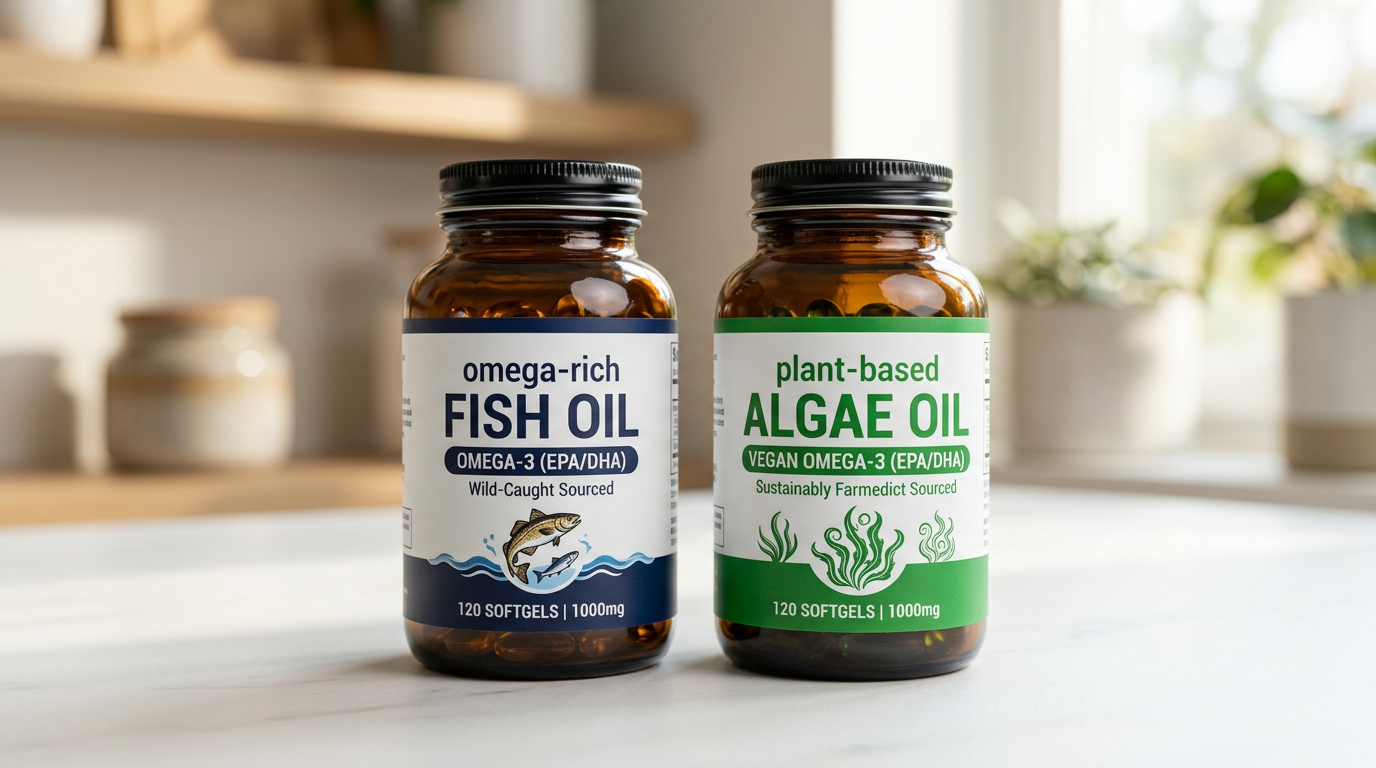
The omega-3 supplement market is dominated by fish oil — but algae-derived EPA/DHA has caught up in quality and is closing the gap on price. For vegans, anyone concerned about contaminants, or athletes wanting the cleanest source possible, the question matters. Here's the head-to-head.
The Same Active Molecules
EPA and DHA are the bioactive omega-3 fatty acids. They are identical molecules whether they come from fish or algae. In fact, fish only contain EPA and DHA because they eat algae — the algae is the original source. Cutting out the middle-fish doesn't reduce potency.
Bioavailability
Multiple head-to-head studies (including a 2014 trial in Lipids in Health and Disease) show algae-derived DHA raises plasma DHA equivalently to cooked salmon. Algae oil and high-quality fish oil produce comparable changes in omega-3 index — the standard biomarker for omega-3 status.
The Practical Trade-Offs
Fish Oil — Advantages
- Cheapest per gram of EPA/DHA
- Widely available at any pharmacy
- Hundreds of years of cultural use
Fish Oil — Drawbacks
- Risk of contaminants (mercury, PCBs, dioxins) if not third-party tested
- Risk of oxidation — rancid fish oil is actively harmful
- Fishy burps, especially with lower-quality products
- Sustainability concerns around overfishing
- Not suitable for vegetarians or vegans
Algae Oil — Advantages
- Zero risk of marine contaminants
- Lower oxidation risk in well-formulated products
- Vegan, vegetarian, and pescatarian friendly
- Sustainable cultivation, no impact on fish stocks
- Often no aftertaste
Algae Oil — Drawbacks
- 2–4× more expensive per gram of EPA/DHA at current pricing
- Many products are DHA-heavy, lower in EPA — read labels carefully
- Less ubiquitous in retail
What About Flax, Chia, and Walnut?
These plant sources provide ALA, not EPA or DHA. The human body converts ALA to EPA at roughly 5–10% and to DHA at under 1%. Realistically, plant ALA sources are not a substitute — you'd need impossible amounts to hit therapeutic EPA/DHA doses. Direct EPA/DHA from fish or algae is required.
Daily Dosing
- General health: 1,000 mg combined EPA + DHA
- Athletes / inflammation control: 2,000–3,000 mg combined
- High-need (recovery from injury, joint issues): Up to 4,000 mg under guidance
Take with a meal containing fat for best absorption. Refrigerate after opening.
How to Choose Quality
- Third-party testing: IFOS for fish oil; USP, NSF, or Informed Sport for either
- EPA + DHA per serving on the front, not total fish oil weight (a 1,000 mg fish oil capsule often contains only 300 mg EPA/DHA)
- Triglyceride (TG) form absorbs better than ethyl ester (EE) form
- Sealed, dark bottle to prevent oxidation
- No fishy smell when opened — that's rancidity
The Bottom Line
For most people on a budget, third-party tested triglyceride-form fish oil is the practical winner. For vegans, vegetarians, anyone with sustainability concerns, or athletes who want the cleanest, most controlled source available, algae oil delivers the same omega-3s at a premium price that's worth it for the trade. Either way — take enough EPA and DHA. ALA alone won't get you there.
Frequently Asked Questions
- Is algae oil as good as fish oil?
- Yes — algae oil delivers the same EPA and DHA molecules. Fish get their omega-3 by eating algae. Studies show comparable plasma omega-3 elevation and tissue incorporation.
- Why is algae oil more expensive?
- Algae is cultivated, not harvested. Production is more controlled (no contaminants) but currently more expensive per gram of EPA/DHA. The gap is narrowing as the industry scales.
- Does flaxseed count as omega-3?
- Flax provides ALA, which the body must convert to EPA and DHA — and conversion is poor (under 10%). For real omega-3 status, you need direct EPA/DHA from fish or algae.
- Is fish oil contaminated with mercury?
- Quality-tested fish oils are generally safe — mercury concentrates in muscle, not fat. Look for IFOS-certified or third-party tested brands. Algae oil sidesteps the issue entirely.