Creatine for Vegetarians & Vegans: The Supplement With the Biggest Plant-Based Payoff
Creatine isn't found in any plant food. Period. Beans, lentils, tempeh, oats — none of them contain meaningful creatine. The result: people eating plant-based diets walk around with measurably lower muscle creatine stores, and they're the group with the most to gain from supplementing.
The 20–30% Gap
Multiple studies (Burke et al., 2003; Watt et al., 2004) show vegetarians have intramuscular creatine concentrations roughly 20–30% lower than meat-eaters. That gap directly affects:
- High-intensity output — sprints, lifts, repeated efforts
- Recovery between sets — phosphocreatine resynthesis is slower
- Cognitive performance under stress — the brain uses creatine too
Why Vegetarians See Bigger Gains
When researchers supplement vegetarians with creatine, the results are dramatic compared to omnivore controls. A landmark Burke study showed vegetarian lifters gained more lean mass, more strength, and bigger Type II fiber growth than meat-eaters on the same protocol. The reason is simple: there's more empty room in the muscle to fill.
Is Creatine Vegan?
Yes — commercial creatine monohydrate is synthetic, made via lab reaction of sarcosine and cyanamide. There's no animal source involved. Watch out only for:
- Capsule shells — many use gelatin. Choose vegetable cellulose capsules or powder.
- Flavored gummies/chews — sometimes contain gelatin or carmine. Check the label.
- "Creatine HCl" or fancy forms — still synthetic and vegan, but monohydrate is cheaper and has more research.
How to Dose
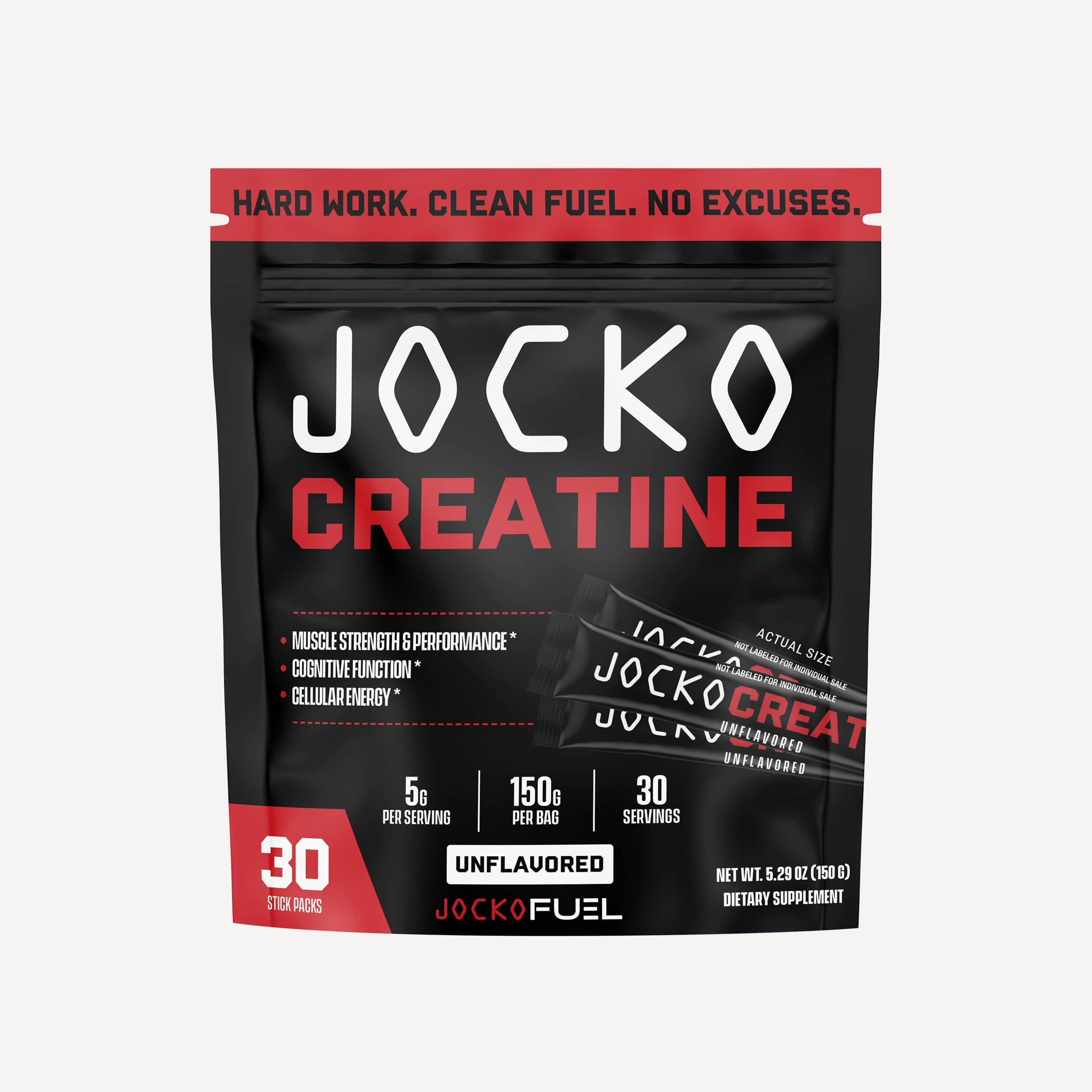
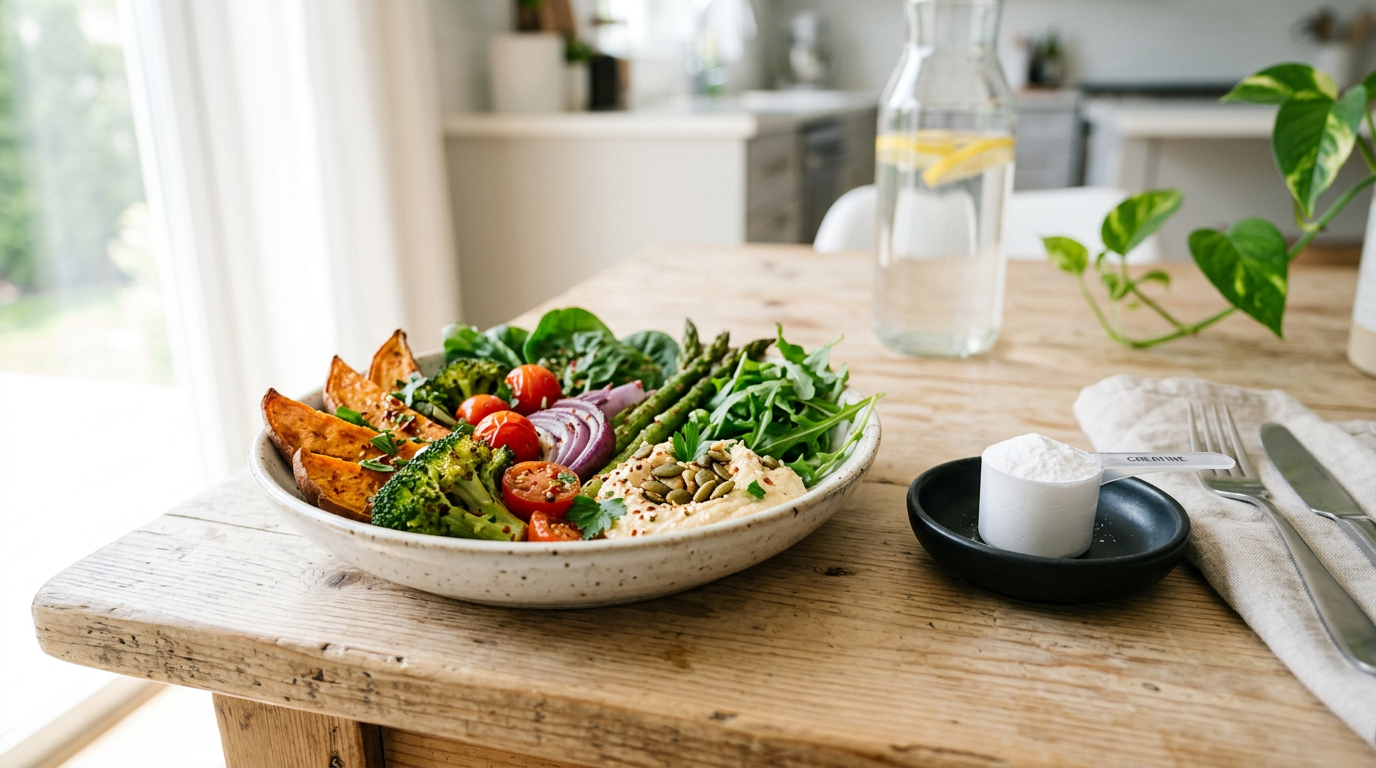
- Standard: 5 g of creatine monohydrate daily. Take with any meal.
- Loading (optional): 20 g/day (split into 4 doses) for 5–7 days, then 5 g maintenance. Saturates muscles faster.
- Timing: Doesn't matter. Consistency does.
- With carbs: A small carb dose can improve uptake — easy for plant-based eaters (banana, oats, rice).
What to Expect
Most vegetarians and vegans notice a strength bump within 2–4 weeks, plus 1–2 kg of lean mass from improved water retention inside muscle cells (this is a feature, not a bug). Cognitive benefits — sharper focus, faster recall under fatigue — are commonly reported in plant-based users.
The Bottom Line
If you eat plant-based and don't take creatine, you're training with the parking brake on. It's the cheapest, most studied, most effective supplement on the market — and vegetarians are the population it helps most. 5 g a day. Done.
Frequently Asked Questions
- Do vegetarians really have less creatine?
- Yes. Studies consistently show vegetarians and vegans have 20–30% lower intramuscular creatine compared to omnivores, because creatine is only found in animal tissue.
- Is creatine vegan?
- Yes. Commercial creatine monohydrate is synthesized in a lab from sarcosine and cyanamide — no animal inputs. Just verify the capsule shell if you avoid gelatin.
- Will I see bigger gains than meat-eaters?
- Often yes. Plant-based athletes have more room to fill in their creatine pool, and studies show greater jumps in strength, lean mass, and cognitive markers after loading.
- Do I need to load?
- Optional. 5 g/day for 28 days saturates the same as a 20 g/day loading week — just slower. Vegetarians sometimes notice loading benefits more because baseline is lower.