How Much Omega-3 Do Athletes Actually Need?
The U.S. average omega-3 intake is around 100 mg of EPA + DHA per day. The clinical target for an athlete is 2,000–3,000 mg. That's a 20–30x gap — and it shows up in inflammation, joint pain, recovery time, and even concussion outcomes.
The Omega-3 Index
Forget grams on the bottle for a moment. The metric that actually predicts outcomes is the Omega-3 Index — the percentage of EPA + DHA in your red blood cell membranes. Optimal is >8%. Most Americans test between 3–5%. Athletes who supplement at clinical doses for 4+ months typically hit 8–11%.
Why Most Fish Oils Fail
- Underdosed: "1,000 mg fish oil" usually means 180 mg EPA + 120 mg DHA. You'd need 6+ softgels for a clinical dose.
- Wrong form: Ethyl ester (cheaper, semi-synthetic) absorbs 70% less than triglyceride form.
- Rancid: Without nitrogen flushing and antioxidant protection, fish oil oxidizes on the shelf — making it pro-inflammatory.
- Heavy metals: Low-quality sources contain mercury, lead, and PCBs above safety thresholds.
What to Look For
- Triglyceride form (rTG).
- IFOS 5-star certification (purity, freshness, potency tested independently).
- EPA + DHA ≥ 800 mg per serving (so a 2 g/day target is reachable in 2–3 softgels).
- NSF Certified for Sport for drug-tested athletes.
Momentous Omega-3
Momentous Omega-3 delivers 1,625 mg of triglyceride-form EPA + DHA per serving, is IFOS 5-star certified, and is NSF Certified for Sport. It's used by 100+ professional sports teams precisely because it actually hits the clinical dose without 8 softgels and a fish-burp aftertaste.
The Protocol
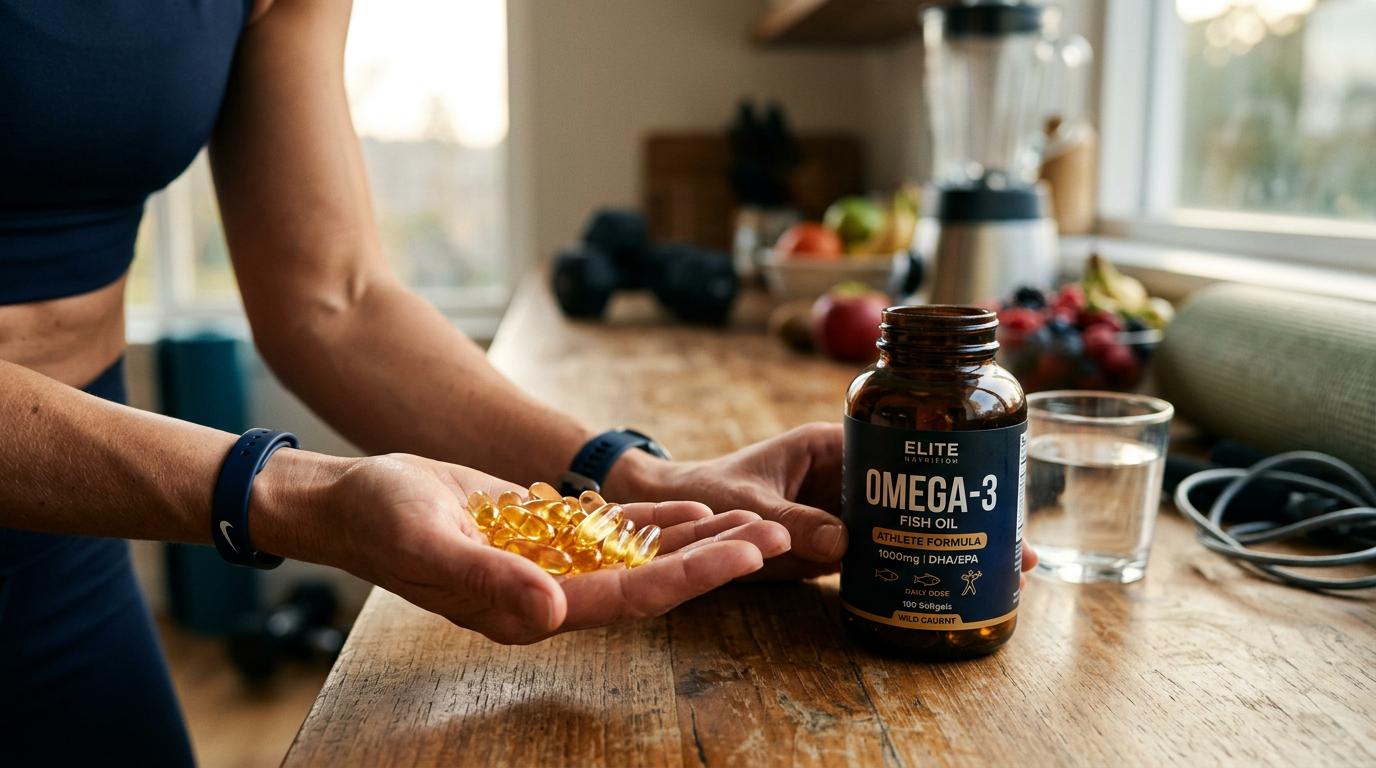
2 softgels with breakfast (with a meal containing some fat for absorption). Re-test your Omega-3 Index at 16 weeks. Adjust dose up if you're still below 8%.
Frequently Asked Questions
- How much EPA + DHA should an athlete take?
- 2,000–3,000 mg combined EPA + DHA daily. Most over-the-counter fish oils deliver only 300–500 mg per softgel of actual omega-3 — even though the label says '1,000 mg fish oil.' Read the EPA/DHA breakdown, not the total oil weight.
- What is the Omega-3 Index and why does it matter?
- It's the percentage of EPA + DHA in your red blood cell membranes. A score above 8% is associated with lower inflammation, faster recovery, better cognitive function, and reduced cardiovascular mortality. Most athletes test below 5%.
- Is triglyceride form really better than ethyl ester?
- Yes — triglyceride-form fish oil has 70% higher bioavailability than ethyl ester, and is the form humans naturally consume from fish. It's also more stable against oxidation.